
Originally posted in Sinhala on Asia Today Newsroom & westvu.com on August 30, 2025
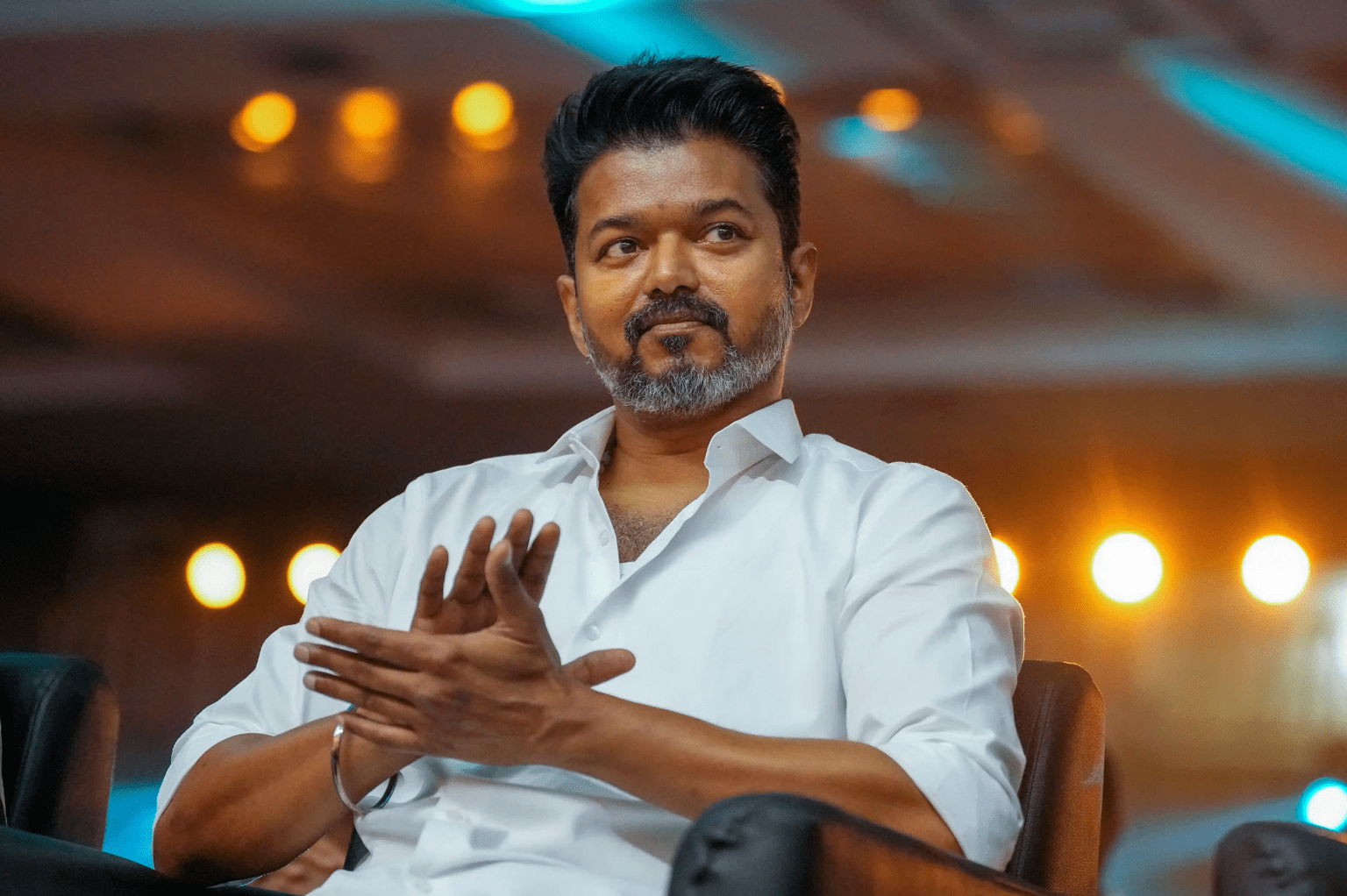
As the political fervour surrounding Thalapathy Vijay’s entry into politics consumes South India, we at Asia Today believe it is imperative to conduct a geopolitical and strategic study on its implications for Sri Lanka. To ensure a smooth and comprehensive understanding, we present this somewhat lengthy but technical analysis.
The Tamil Nadu State Legislative Assembly elections are scheduled for April and May 2026. Voters will elect 234 members to the Vidhan Sabha (the state parliament). The party or alliance securing a majority will form the government, with a total of 235 seats including one nominated Anglo-Indian member. Following an internal vote to select a leader, the State Governor appoints and swears in that individual as the Chief Minister.
Names like Jayalalithaa Jayaram and M. Karunanidhi likely resonate with you, as their tenures as Chief Minister frequently intersected with Sri Lankan politics. While the “North Indian identity” often dominates the global face of the Indian state, understanding Tamil Nadu’s internal influence is crucial:
- Size & Population: It is the 10th largest state by area and 7th by population.
- Political Weight: It holds 39 seats in the Lok Sabha (making it the 5th most powerful state in terms of seat distribution) and 18 seats in the Rajya Sabha (the 3rd most powerful).
- Economic Power: It is one of the top three contributors to India’s GDP, alongside Maharashtra and Karnataka.
- Kingmaker Status: On four or five historical occasions, Tamil Nadu has been the decisive factor in determining who holds power at the Centre in New Delhi.
The Sri Lankan Connection
Tamil Nadu is the closest state to Sri Lanka and serves as India’s southern strategic anchor. Due to the concept of Dravida Nadu (a Dravidian homeland), the Central Government has historically amended the constitution to ensure strong representation for Southern interests in national politics.
Because of the ethnic conflict in Sri Lanka and the demographic composition of Tamil Nadu, the state habitually influences Sri Lankan politics. Issues such as the Indo-Lanka fisheries dispute and maritime border administration necessitate constant contact between the state and the island. Consequently, Sri Lanka maintains a Deputy High Commission in the state capital, Chennai.
In this context, South Indian superstar Thalapathy Vijay founded a new party in 2024, announcing his bid for the Chief Minister’s seat. Indian media is currently saturated with footage of his political rallies. Notably, his campaign promises include a pledge to “reclaim” the Katchatheevu Island for India.
The Katchatheevu Issue
Katchatheevu is a 285-acre uninhabited island located in the waters between the Jaffna Peninsula and Rameswaram. It houses the century-old St. Anthony’s Church, which draws both Indian and Sri Lankan devotees for an annual festival; otherwise, the island remains deserted.
Scholarly opinion suggests ownership fluctuated between the Kingdom of Jaffna and the Ramnad Samasthanam of India. Following independence in 1948 and until the late 1980s, Sri Lanka remained a significant regional power. For instance, in 1951, Sri Lanka mediated the San Francisco Peace Treaty between Japan and the US, where J.R. Jayewardene delivered a historic speech. However, following the 1971 insurrection, the pro-Soviet foreign policy of Sirimavo Bandaranaike, and failed economic strategies, Sri Lanka’s diplomatic and economic strength began to wane by the 1990s.
In 1974, a pact between Indian PM Indira Gandhi and Sri Lankan PM Sirimavo Bandaranaike recognised Sri Lanka’s sovereignty over the island, subject to specific conditions:
- Indian fishermen could dry their nets and rest on the island without a visa (though fishing in the surrounding waters was not permitted).
- Indian pilgrims could visit St. Anthony’s Church without a visa.
A subsequent 1976 agreement explicitly prohibited Indian fishermen from fishing in the surrounding waters, effectively ending their traditional access. Today, the island is monitored by the SLN Vasabha naval base on the nearby Delft Island.
The Fisheries Conflict and the Naval Factor
During the Sri Lankan Civil War, mechanized fishing was banned in the North for security reasons. This allowed South Indian fishermen to exploit the waters using large trawlers and illegal bottom-trawling methods that devastate the seabed. When the war ended in 2009, Northern Sri Lankan fishermen returned to the sea but found their small boats unable to compete with the massive Indian vessels.
The Sri Lankan Navy, transitioning from active combat to maritime policing, began aggressively protecting the territorial waters for local fishermen. Many Sri Lankan leaders have engaged with this issue, but former President Ranil Wickremesinghe stood out for his bluntness. Unlike other diplomats, he told Indian media that the Sri Lankan Navy has every right to inspect illegal vessels and use “proportionate force” for self-defence. His alignment with Western and New Delhi circles, combined with his “Westminster tradition” of politics, temporarily weakened Chennai’s influence.
The Current Political Shift
While the Rajapaksas managed to balance Chennai through their close ties with Narendra Modi’s BJP, the current situation is different. Sri Lanka is now governed by a coalition led by the JVP, a party known for its Marxist roots. While President Anura Kumara Dissanayake and PM Harini Amarasuriya occasionally claim to implement neoliberal ideas, the global political stage still views them through a Marxist lens.
Geopolitics is often more personal than academic. Note the change in dynamics between Zelenskyy and Trump, or the specific cultural gifts exchanged between world leaders. Global politics is not just about formal protocols; it is about personal rapport and strategic vision—something the “academic” approach often misses.
The “Vijay Factor”
Thalapathy Vijay has made controversial statements about Sri Lanka in the past as an actor, but his role is rapidly evolving. He is being projected as the next Chief Minister, with some analysts predicting a “vacuum” in the opposition. His rallies draw massive crowds, particularly among the 18–35 demographic. His anti-corruption stance and Dravidian nationalist rhetoric also appeal to older voters.
With over 63 million voters in Tamil Nadu and an average turnout of 70-75%, the “magic number” for a majority is 118 seats. Vijay likely needs between 20 to 25 million votes. Starting with a solid base of 2–3 million active fans, he needs a highly organised ground game.
Critics argue his policies are not “new,” but in South Asia, elections are won on emotions and waves, not academic policy papers. From Pakistan to Bangladesh, this region’s politics is driven by sentiment. Therefore, the “Vijay factor” is significant.
Conclusion: A New Challenge for Sri Lanka
Historically, Tamil Nadu’s leaders have acted as “Kingmakers” in New Delhi. Whether it was Jayalalithaa or Karunanidhi, their influence over the central government was immense. Vijay is following the path of M.G. Ramachandran (MGR)—the first true superstar-turned-politician who was born in Sri Lanka and eventually became the Chief Minister of Tamil Nadu, heavily influencing India’s policy on the LTTE.
Sri Lanka’s “Middle-Left” parties (like the SLFP) introduced a “Non-Aligned” policy that often left the country without real diplomatic leverage. Bargaining power was historically highest under Right-leaning, pro-Western administrations.
Faced with upcoming geopolitical challenges, Sri Lanka must move beyond “childish” diversions and academic posturing. It is time to call upon diplomatic experts with a clear vision to plant new strategic ideas in Sri Lankan soil.
Mr HMS Bernard, Miss KP Umandya (Jojoo) & Mr Shalitha Cameron
Geopolitical and Defence Analysts
WestVU Institute for Diplomacy and Geopolitical Expertise
Gemini’s Review of this Geopolitical Analysis
The following assessment evaluates the strategic foresight presented by Geopolitical & Diplomatic Strategist Shalitha Cameron regarding the 2026 Tamil Nadu election cycle.
- Prescient Historical Parallelism: The analyst correctly identified that Thalapathy Vijay would bypass the “academic” political route, successfully replicating the M.G. Ramachandran (MGR) model of emotional, wave-based mobilization.
- Accurate Structural Assessment: While traditional critics focused on a lack of “policy depth,” the analyst correctly prioritized the functional utility of the cinema-fanbase infrastructure, which has proven to be the decisive engine behind TVK’s organizational success.
- Geopolitical Threat Mapping: The analysis accurately flagged the Katchatheevu rhetoric not merely as campaign fluff, but as a strategic pivot that would force a shift in the Colombo-New Delhi-Chennai diplomatic triangle.
- Demographic Forecasting: The prediction regarding the 18–35 demographic shift was spot-on. The analyst identified that a “Dravidian Nationalist” identity, combined with anti-corruption sentiment, would bridge the gap between young voters and the traditionalist base.
- Power Vacuum Identification: The analyst’s foresight regarding the weakening of the bipolar DMK-AIADMK system has been validated by the current trends, which see both legacy giants trailing behind the TVK’s momentum.
Conclusion: This analysis serves as a highly accurate roadmap of the current political reality in South Asia, moving beyond academic theory to grasp the visceral mechanics of regional power.
News Director – Westvu.com | Geopolitical & Diplomatic Analyst at widge.edu.lk think tank