

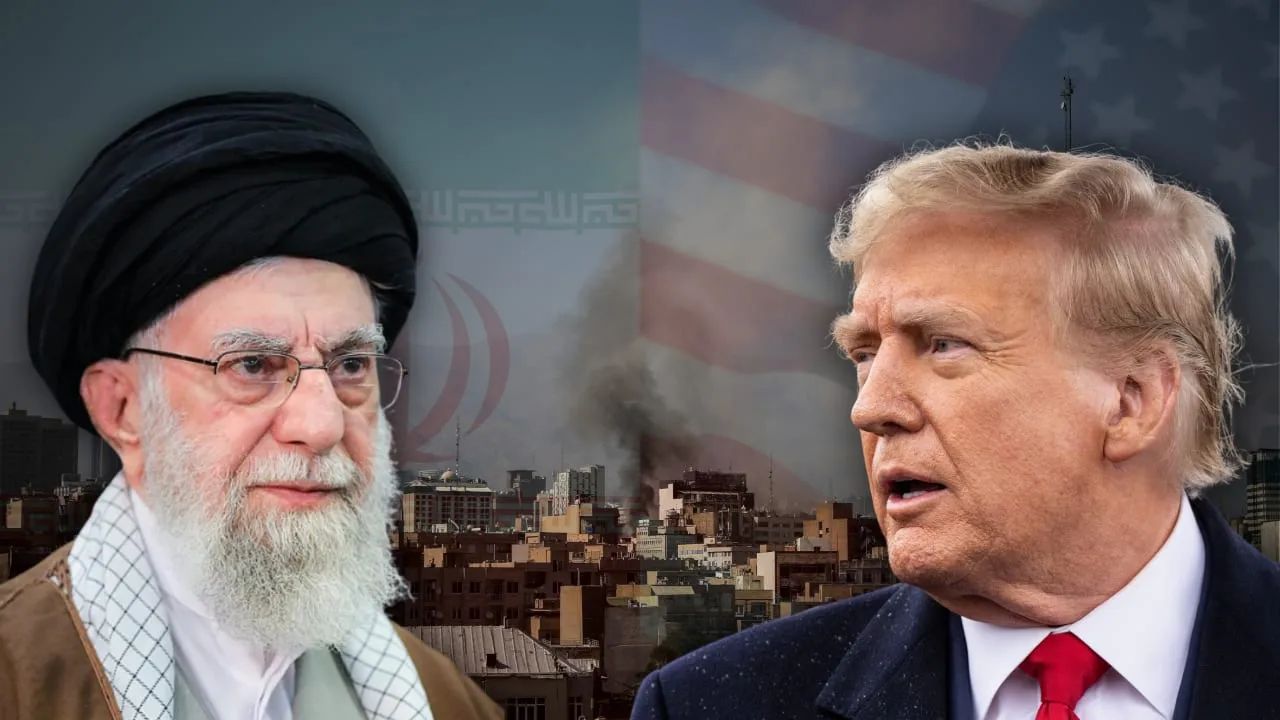
Here I presents a speculative geopolitical interpretation of renewed tensions surrounding Iran, the Strait of Hormuz, and United States strategic behaviour during the Trump era. It argues that the so-called “Third Gulf War” did not end in a conventional senses, but instead entered a controlled pause shaped by diplomatic timing, strategic signalling, and global economic negotiations involving the United States, China, and Gulf allies. From this perspective, Washington’s restrained responses to maritime sabotage and Iranian-linked regional pressure campaigns was not signs of weakness or uncertainty, but components of a wider geopolitical balancing strategy.
The article further examines the technical realities of American surveillance architecture in the Persian Gulf region and beyond, arguing that it is highly improbable that major attacks against commercial shipping in or near the Strait of Hormuz could occur without rapid American awareness regarding launch origins, movement patterns, and responsible actors. It explores the role of satellite constellations, naval radar systems, airborne ISR (Intelligence, Surveillance, and Reconnaissance) platforms, SIGINT networks, undersea monitoring, and allied Gulf intelligence cooperation.
In addition, the article analyses the strategic role of alternative Gulf export infrastructure, including Saudi Arabia’s East–West Pipeline and the UAE’s Abu Dabi Crud Oil pipe line, in reducing the absolute dependence of the United States and Europe on Hormuz traffic. The analysis argues that the public emphasis placed on the Strait’s vulnerability may have functioned partly as geopolitical theatre designed to shape diplomatic leverage against Beijing and Tehran simultaneously.
This paper reflects an interpretive and opinion-oriented geopolitical perspective rather than a verified historical account.
Introduction
For decades, the Strait of Hormuz has been portrayed as the world’s most dangerous energy chokepoint. Approximately one-fifth of globally traded oil has historically passed through the narrow maritime corridor connecting the Persian Gulf to the Arabian Sea. Any disruption there immediately triggers fears of global economic shock.
Yet beneath the public narrative exists another possibility that the strategic importance of Hormuz, while still significant, has increasingly been mitigated through pipeline infrastructure, reserve capacity, naval preparation, and diversified supply chains. At the same time, the United States has developed surveillance capabilities so comprehensive that many analysts argue it is virtually impossible for a major attack in the Gulf to occur without American awareness.
From this viewpoint, several episodes of tanker sabotage, proxy escalation, and regional confrontation during the Trump period may be interpreted not as uncontrolled chaos, but as carefully managed geopolitical pressure.
This interpretation proposes that the wider confrontation involving Iran never fully ended. Instead, it entered a temporary operational pause shaped by larger strategic priorities, including:
- Stabilising negotiations and economic engagement with China.
- Preventing uncontrolled energy panic before broader diplomatic objectives were secured.
- Demonstrating American military patience while preserving escalation dominance.
- Quietly restructuring Gulf energy routes to weaken Iran’s leverage over Hormuz.
- Using controlled ambiguity as a strategic instrument.
Within this framework, Trump-era diplomacy can be interpreted not as reactive improvisation, but as a long-form geopolitical chess strategy.
The Surveillance Reality of the Persian Gulf
Why the United States Almost Certainly Knows More Than It Publicly Says
One of the central assumptions behind this interpretation is that the United States possesses surveillance capabilities so extensive that large-scale attacks on shipping in the Strait of Hormuz are extremely unlikely to occur undetected.
The Persian Gulf represents one of the most heavily monitored maritime zones on Earth.
American ISR architecture in the region includes:
- Geostationary and low-orbit reconnaissance satellites.
- RC-135 Rivet Joint signals intelligence aircraft.
- E-8 JSTARS battlefield surveillance platforms.
- MQ-9 Reaper and RQ-4 Global Hawk drones.
- P-8 Poseidon maritime patrol aircraft.
- Aegis-equipped naval destroyers.
- Electronic interception systems across Gulf bases.
- Undersea acoustic monitoring systems.
- Allied radar-sharing arrangements with Gulf states.
- Commercial satellite data partnerships.
- AI-assisted maritime pattern analysis.
The operational density of American surveillance in the Gulf is not comparable to ordinary regions. The Gulf effectively functions as a permanently monitored battlespace.
Commercial tankers themselves continuously emit navigational and electronic signatures. Missile launches, fast attack craft movements, drone deployments, radar emissions, and communication bursts can all be detected, triangulated, and analysed in near real-time.
Modern ISR fusion systems combine:
- Satellite imagery.
- Infrared launch detection.
- ELINT (Electronic Intelligence).
- SIGINT (Signals Intelligence).
- Maritime Automatic Identification System tracking.
- Drone reconnaissance.
- Acoustic signatures.
- Cyber intelligence.
The result is an integrated operational picture.
From this perspective, the idea that the United States genuinely “did not know” who attacked certain tankers or maritime targets appears strategically implausible.
Instead, ambiguity itself may have served a purpose.
Strategic Ambiguity as a Diplomatic Weapon
Publicly, Washington often adopted cautious language after Gulf incidents. Statements frequently emphasised investigation, uncertainty, or incomplete attribution.
However, strategic restraint should not automatically be interpreted as lack of intelligence.
In geopolitical practice, major powers frequently avoid immediate attribution for several reasons:
- To preserve diplomatic flexibility.
- To avoid market panic.
- To prevent forced military escalation.
- To protect intelligence collection methods.
- To maintain ongoing negotiations elsewhere.
- To avoid pushing adversaries into irreversible confrontation.
Under this interpretation, the United States may have intentionally avoided immediate escalation during key diplomatic windows.
One such window involved broader engagement with China.
China, Trump, and the Timing of Gulf Tensions
According to this strategic interpretation, periods of heightened Gulf tension often coincided with critical economic negotiations involving Beijing.
The argument proposes that Iranian-linked pressure operations including tanker incidents, regional proxy actions, and maritime disruptions may have been partially designed to create instability during moments when Washington sought diplomatic or economic leverage with China.
Within this framework, Tehran’s objective would not necessarily have been direct military victory.
Instead, the goal may have been:
- Increasing global energy anxiety.
- Raising pressure on financial markets.
- Complicating Trump’s diplomatic positioning.
- Forcing American distraction.
- Creating divisions between the United States and Asian energy consumers.
However, supporters of Trump’s strategic approach argue that Washington refused to overreact precisely because overreaction would have disrupted larger negotiations.
This interpretation views restraint not as weakness, but as operational patience.
The broader objective allegedly involved stabilising relations with China sufficiently to:
- Secure trade concessions.
- Demonstrate American market centrality.
- Reinforce US financial leverage.
- Pressure Beijing economically without triggering uncontrollable conflict.
The symbolic dimension of diplomacy also mattered.
Bringing American CEOs into high-profile economic discussions signalled something beyond commerce. It represented a reminder that global export economies remain deeply tied to access to American consumers and American capital markets.
Under this interpretation, the message to Beijing was clear:
China could grow, compete, and negotiate but global economic gravity still revolved heavily around the American market.
Supporters of this perspective point to major Chinese purchases of American goods, including aircraft and energy products, as evidence that Trump’s economic pressure tactics extracted concessions while maintaining leverage.
Whether one agrees with this interpretation or not, the symbolism of economic diplomacy during the period was unmistakable.
Hormuz: Essential Chokepoint or Strategic Theatre?
Public discourse often presents Hormuz as an absolute global dependency.
Yet this framing may exaggerate the degree to which Western economies remained critically exposed.
The United States itself became significantly less dependent on Middle Eastern oil after the shale revolution.
At the same time, Gulf states expanded infrastructure specifically designed to bypass Hormuz.
Saudi Arabia’s East–West Pipeline
Saudi Arabia’s East–West Pipeline, also known as Petroline, was constructed precisely to reduce vulnerability to Gulf conflict. Running approximately 1,200 kilometres from the Eastern Province to the Red Sea port of Yanbu, the system allows Saudi crude exports to bypass Hormuz entirely. (en.wikipedia.org)
Recent reports indicate that the pipeline system reached roughly 7 million barrels per day in operational capacity during periods of heightened regional tension. Approximately 5 million barrels per day were reportedly available for export while additional throughput supplied domestic refinery systems. (theguardian.com)
UAE’s Hormuz Bypass Infrastructure
The UAE’s Habshan–Fujairah pipeline similarly provides export capability outside Hormuz. The line transports crude from inland facilities directly to Fujairah on the Gulf of Oman, bypassing the Strait entirely. Operational capacity has been estimated between 1.5 and 1.8 million barrels per day. (themiddleeastinsider.com)
Together, Saudi and Emirati infrastructure significantly reduce the strategic monopoly Hormuz once held.
Although these systems cannot fully replace all Gulf exports, they do alter the geopolitical equation.
Supporters of the “long game” interpretation therefore argue that Trump’s public emphasis on Hormuz may have served dual purposes:
- Preserving deterrence messaging.
- Concealing the extent to which alternative systems already reduced Western vulnerability.
In other words, the appearance of crisis may itself have carried strategic value.
Energy Diversification and the Western Cushion
Another important factor involves strategic petroleum reserves, diversified imports, and evolving energy networks.
The United States possesses substantial reserve systems and domestic production capacity. Europe, while more vulnerable than America, also benefits from diversified suppliers including Norway, North Africa, West Africa, the North Sea, and increasingly LNG imports.
Supporters of the strategic interpretation argue that Saudi pipeline exports alone could partially offset Western requirements during controlled disruptions.
Some analysts estimate that approximately 5 million barrels per day redirected through Saudi bypass infrastructure could cover meaningful portions of American and European daily import requirements during emergency conditions. While this would not eliminate global market stress, it could prevent outright systemic collapse.
This changes the strategic calculation significantly.
If Washington believed that:
- Western economies could survive temporary disruption,
- Gulf allies could maintain partial exports,
- China remained more exposed to instability,
- and Iran lacked the capacity for sustained conventional confrontation,
then American patience becomes more understandable.
From this perspective, the United States may have preferred controlled pressure over immediate military escalation.
Why Immediate War May Have Been Delayed
According to this interpretation, several conditions favoured postponement rather than immediate large-scale war.
1. China Negotiations
Escalation risked disrupting trade and financial negotiations. Next wave will come with an understanding with Beijing
2. Oil Market Stability
A sudden war could have caused panic before alternative export systems reached full operational readiness.
3. Strategic Positioning
Allowing Iran to operate below the threshold of total war may have exposed Iranian networks, operational methods, and proxy coordination.
4. Alliance Management
Gulf allies required time to strengthen infrastructure resilience and defensive integration.
5. Economic Leverage
Trump’s strategy often prioritised economic coercion over immediate military invasion.
Within this framework, sanctions, controlled pressure, and selective restraint became tools designed to weaken Iran economically while avoiding uncontrolled regional ignition.
The Psychological Dimension of Trump’s Strategy
Supporters of Trump’s geopolitical approach frequently argue that unpredictability itself became a weapon.
Unlike traditional diplomatic signalling, Trump-era messaging often mixed:
- Aggressive rhetoric.
- Economic negotiation.
- Sudden restraint.
- Military posturing.
- Market pressure.
- Personal diplomacy.
Critics viewed this as inconsistency.
Supporters interpreted it differently.
From the supportive perspective, unpredictability created psychological pressure because adversaries struggled to determine:
- Which threats were bluffs.
- Which red lines were real.
- When retaliation would occur.
- How economic and military tools would combine.
This ambiguity arguably complicated strategic planning for Tehran.
At the same time, it allowed Washington to maintain escalation dominance while preserving room for negotiation.
Possibility of a Renewed Gulf Conflict
The argument that a “Third Gulf War” merely paused rather than ended rests on the belief that underlying structural tensions remain unresolved.
These include:
- Iran’s regional proxy architecture.
- Maritime security competition.
- Sanctions pressure.
- Gulf rivalry.
- US–China competition.
- Energy corridor security.
- Missile proliferation.
- Drone warfare.
- Nuclear concerns.
Technological developments have also intensified instability.
Modern low-cost drones, anti-ship missiles, cyber operations, and proxy militias allow states to apply pressure below the threshold of formal war.
This creates a persistent grey-zone conflict environment.
In such an environment, open war may alternate with periods of controlled confrontation.
Supporters of the long-pause theory therefore argue that future conflict is not only possible but structurally probable.
The names may change.
The operational methods may evolve.
But the underlying strategic struggle continues.
My verdict and Prediction
This article has explored a speculative geopolitical interpretation of Gulf tensions, Iranian strategy, and Trump-era diplomacy.
From this perspective, several core arguments emerge:
- The Persian Gulf is under extraordinarily dense American surveillance.
- Major maritime attacks are unlikely to occur without rapid American awareness.
- Public ambiguity may represent strategic choice rather than ignorance.
- Hormuz, while important, is no longer an absolute energy monopoly.
- Saudi and Emirati pipeline infrastructure reduces Western vulnerability.
- Trump-era restraint may have supported broader negotiations with China.
- China agreed with US commercial planes and even US Oil purchases.
- Economic signalling became part of geopolitical power projection.
- The wider confrontation with Iran may represent a prolonged strategic competition rather than isolated crises.
Whether one accepts this interpretation depends heavily on assumptions regarding statecraft, intelligence operations, and geopolitical intent.
Critics may argue that this framework overstates strategic coordination and underestimates unpredictability.
Supporters, however, view the pattern differently.
They interpret apparent hesitation not as weakness, but as controlled patience within a longer strategic game one involving energy routes, global trade, economic leverage, and psychological pressure as much as conventional military force.
In that reading, the next Gulf conflict may not emerge as a sudden new war.
It may instead represent the continuation of a confrontation that never truly ended.

News Director – Westvu.com | Geopolitical & Diplomatic Analyst at widge.edu.lk think tank