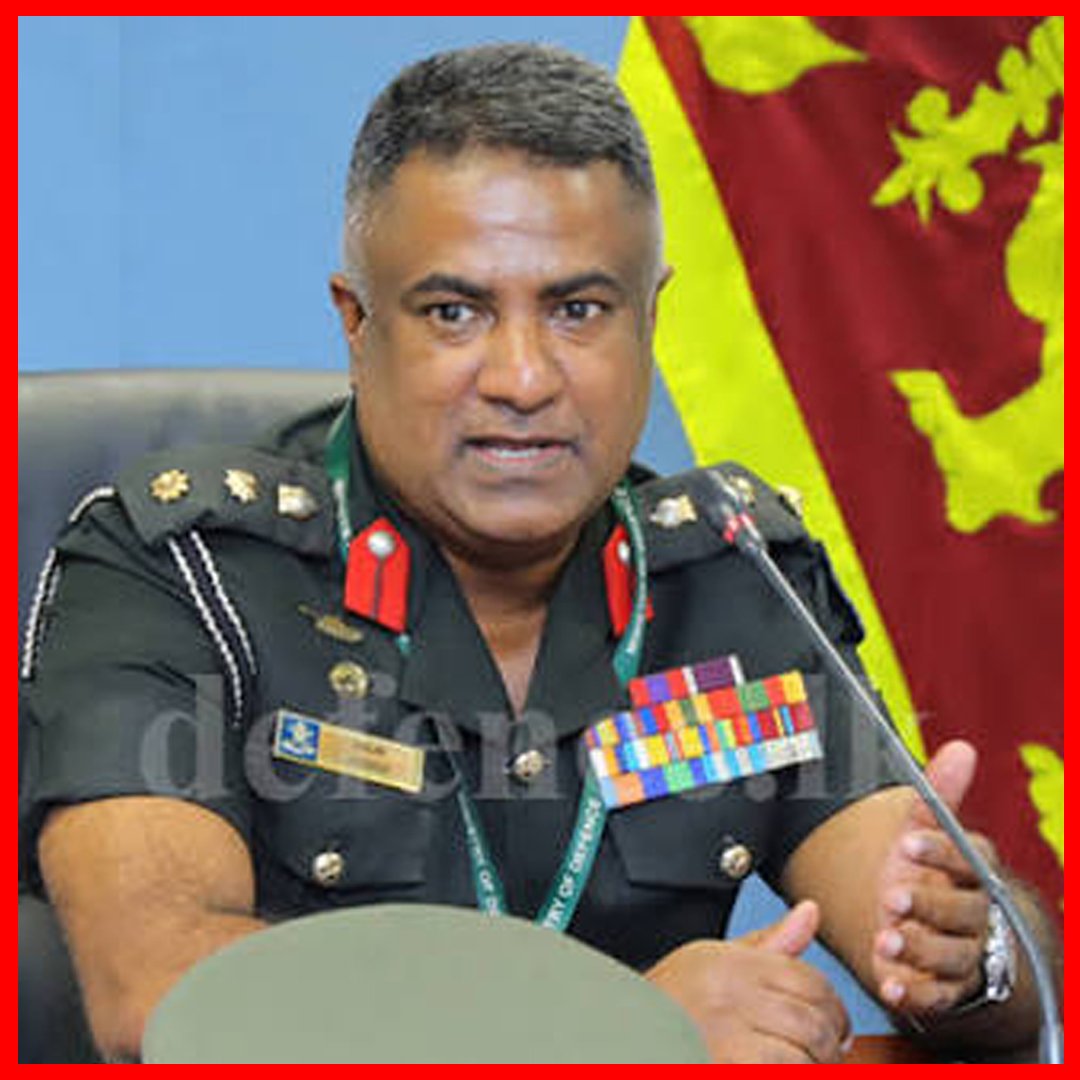


BY COL. NALIN HERATH
For decades, global security frameworks have largely been built around traditional threats — military invasions, interstate conflicts, territorial disputes, and conventional warfare. Nations invested heavily in armies, naval power, intelligence networks, missiles, and deterrence capabilities to safeguard sovereignty and national interests.
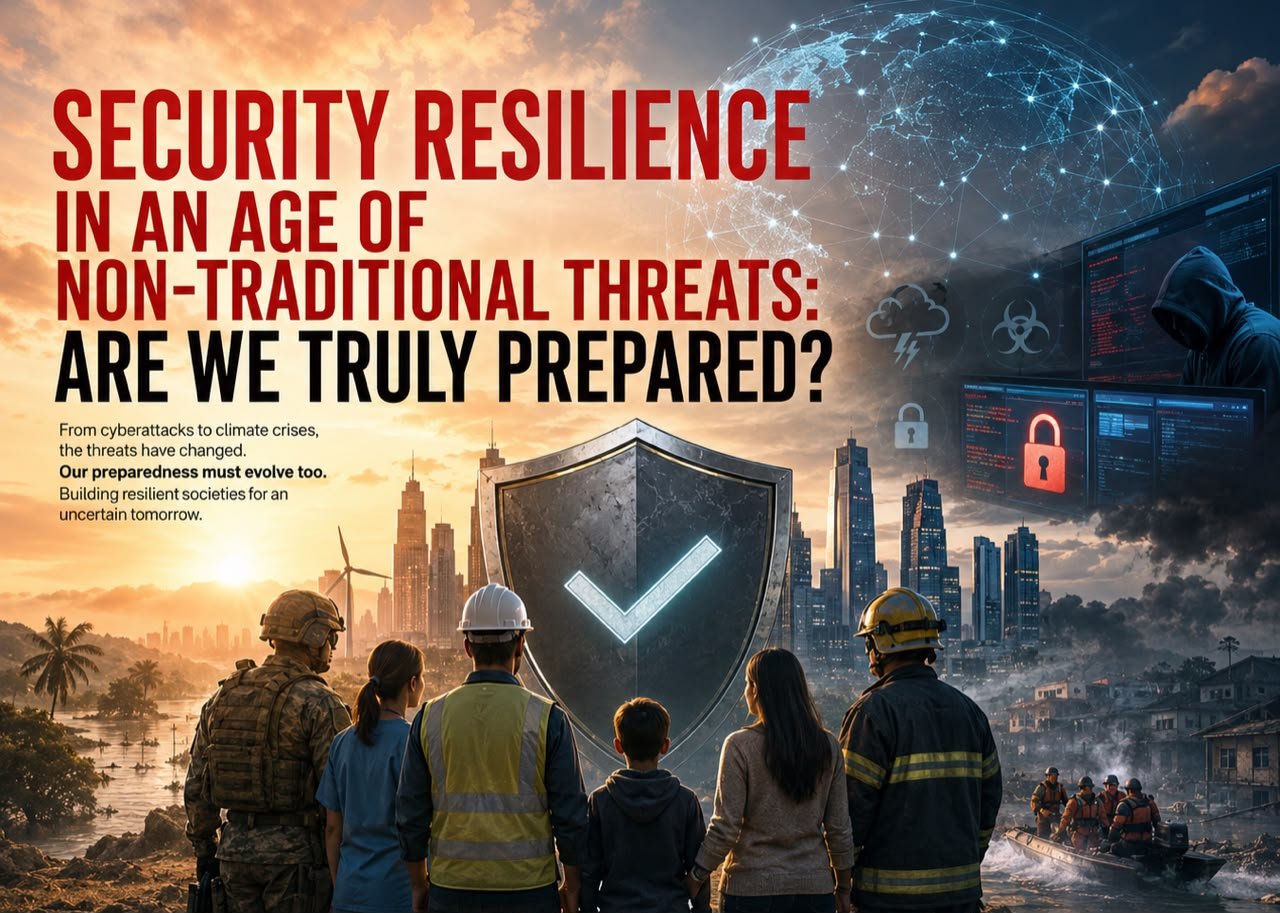
However, the nature of threats confronting the modern world has changed dramatically. Today, the most disruptive dangers are increasingly non-traditional, unpredictable, interconnected, and capable of destabilising entire societies without a single conventional battlefield engagement.
The world now faces a complex spectrum of threats ranging from cyber warfare, misinformation campaigns, pandemics, terrorism, artificial intelligence-driven disruptions, energy insecurity, climate-related disasters, economic sabotage, and attacks on critical infrastructure. These threats transcend borders, evolve rapidly, and often emerge from non-state actors, anonymous networks, or even decentralised technological systems.
Yet despite this changing reality, many national security structures remain disproportionately focused on traditional military preparedness. While conventional defence remains essential, one critical question continues to emerge: Are we truly prepared for the security challenges of the future?
Popular culture and political thrillers have often explored such vulnerabilities long before policymakers openly acknowledged them. Films such as London Has Fallen, Vantage Point, and House of Dynasties portray scenarios involving coordinated attacks, leadership decapitation attempts, systemic confusion, cyber-enabled disruptions, and cascading institutional failures. While fictional, these narratives reflect genuine strategic concerns. They highlight how modern societies can become vulnerable when multiple systems fail simultaneously, communication networks, emergency response mechanisms, intelligence coordination, political leadership, and public trust.
In reality, many recent global events demonstrate that such vulnerabilities are no longer hypothetical. The Covid-19 pandemic exposed how even the most advanced nations struggled to maintain institutional resilience during prolonged crises. Health systems collapsed under pressure, supply chains were disrupted globally, misinformation spread rapidly through digital platforms, and economic activity slowed at an unprecedented scale. The pandemic demonstrated that national security is no longer confined to military defence alone; it also includes public health preparedness, societal stability, economic continuity, and institutional adaptability.
Similarly, cyber threats have emerged as one of the most dangerous non-traditional security challenges of the modern era. Governments, hospitals, financial systems, airports, energy grids, and communication infrastructure increasingly depend on interconnected digital systems. A single cyber-attack can paralyse critical sectors, disrupt governance, compromise sensitive data, and generate panic among populations.
Cyber warfare no longer belongs exclusively to technologically advanced States; relatively small groups or individuals with technical expertise can now create disproportionate damage across borders.
Another growing concern is the weaponisation of information. Disinformation campaigns, manipulated narratives, deep fake technologies, and psychological operations increasingly influence political environments, public perception, and social cohesion. In many societies, the line between information and manipulation has become blurred. Public trust — once considered a stable pillar of governance, is now vulnerable to digital influence operations that can polarise communities, weaken institutions, and create internal instability without physical confrontation.
Artificial intelligence further complicates this evolving landscape. While AI offers enormous opportunities for development and efficiency, it also presents emerging security risks. AI-driven cyber-attacks, autonomous systems, algorithmic misinformation, surveillance misuse, and data manipulation are becoming increasingly sophisticated. The rapid pace of technological advancement often exceeds the ability of legal frameworks, governance systems, and security institutions to adapt effectively.
Climate change and environmental insecurity must also be recognised as major non-traditional threats. Extreme weather events, food insecurity, water scarcity, migration pressures, and natural disasters increasingly affect national stability. Environmental crises can intensify social tensions, economic hardship, and geopolitical competition over limited resources. Security resilience in the future will depend not only on military capability but also on environmental preparedness and sustainable national planning.
In many developing countries, including Sri Lanka, non-traditional threats pose particularly serious challenges due to resource limitations, institutional constraints, and economic vulnerabilities. Cyber security readiness, crisis coordination mechanisms, public communication systems, and infrastructure resilience require continuous modernisation. The Easter Sunday attacks in Sri Lanka demonstrated how intelligence gaps, coordination failures, and institutional fragmentation can have devastating consequences even when warning signs exist.
Such incidents reinforce the importance of integrated national security approaches that combine intelligence, preparedness, communication, and rapid response capabilities.
Security resilience today requires a whole-of-government and whole-of-society approach. Modern threats are interconnected, meaning that ministries, private sector institutions, academia, media organisations, technology experts, emergency services, and civil society all play critical roles in national preparedness. Security can no longer remain the sole responsibility of military or intelligence agencies. National resilience depends on the collective strength of institutions, public trust, strategic communication, and adaptive governance.
Equally important is the need for strategic foresight. Governments must invest not only in responding to crises but also in anticipating future risks. Scenario planning, simulation exercises, cyber security audits, intelligence integration, and public awareness programmes should become central components of national security policy. Decision-makers must prepare for “low probability but high impact” events that could severely disrupt national systems.
Leadership also becomes crucial during periods of uncertainty. In moments of crisis, effective leadership can prevent panic, maintain institutional stability, and preserve public confidence. Transparent communication, coordinated decision-making, and rapid adaptability are essential characteristics of resilient governance. Countries that fail to maintain institutional trust during crises often face deeper instability than the crisis itself.
At the international level, cooperation is becoming increasingly necessary. Non-traditional threats do not respect national borders. Cyber-attacks can originate anywhere, pandemics spread globally within weeks, and misinformation travels instantly through digital platforms. As a result, intelligence sharing, technological cooperation, regional coordination, and multilateral engagement are essential components of modern security resilience.
The future security environment will likely become even more complex. Hybrid threats, combining cyber operations, economic pressure, disinformation, political interference, and asymmetric tactics, are expected to increase. Adversaries may target not only military assets but also societal vulnerabilities, public psychology, economic systems, and digital infrastructure. The battlefield of the future may not always be visible, yet its consequences could be more disruptive than conventional warfare.
Therefore, nations must redefine the meaning of security itself. True security resilience is not measured only by military strength, but by the ability of a country to withstand shocks, adapt to evolving threats, maintain institutional continuity, and protect public confidence during periods of crisis.
Preparedness must extend beyond defence establishments into every critical sector of society.
The central question remains: Are we prepared?
The answer may vary from country to country, but one reality is increasingly clear — the threats of tomorrow will not always arrive in the form we expect. They may emerge silently through computer networks, manipulated information, economic disruption, biological crises, or coordinated attacks on critical systems. The countries that survive and succeed in this evolving environment will not necessarily be those with the largest militaries, but those with the strongest resilience, adaptability, coordination, and strategic vision.
In an era defined by uncertainty and interconnected risks, security resilience is no longer optional. It is a national necessity.
(Col. Nalin Herath, RSP was the former Military Spokesman and DG INSS)