


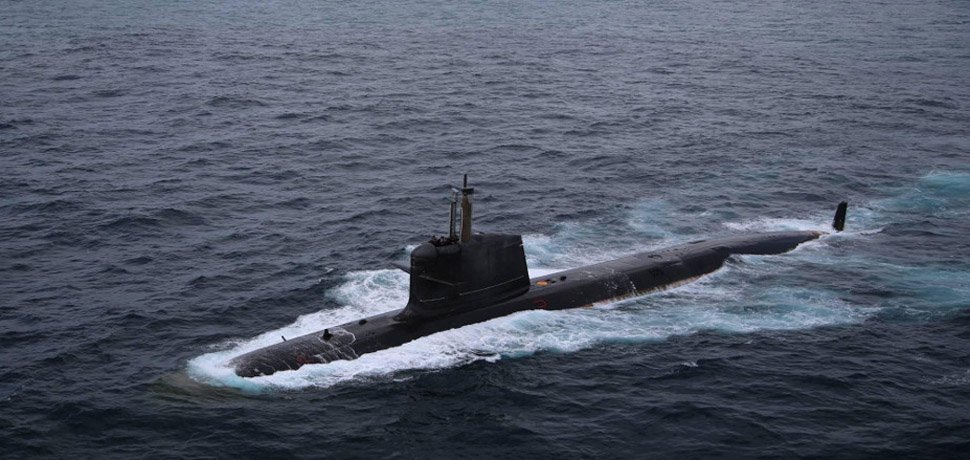
New Delhi, September 19 — India’s first nuclear-powered ballistic missile submarine, INS Arihant, successfully carried out a full sequence of K-15 missile trials, including challenging salvo launches, a former senior naval officer has disclosed.
Speaking on the NDTV podcast Ctrl+Alt+Defence, former Vice Admiral Sanjay Mahindru described how the submarine progressed through a carefully staged testing programme after its sea trials and reactor power ascension. The trials of the B-05, better known as the K-15 Sagarika submarine-launched ballistic missile, began with “pop-up” launches in which the missile was ejected from its tube without flying a complete trajectory. These were followed by minimum-range and maximum-range firings before the crew moved on to salvo launches — the simultaneous or near-simultaneous firing of multiple missiles.
Salvo firing presented particular technical difficulties, Mahindru noted. The sudden loss of weight and the intake of seawater into the launch system alter the submarine’s buoyancy, requiring rapid adjustments by the boat’s control systems to maintain stability and depth. The tests also validated the full strategic launch sequence, including the receipt and decryption of launch authorisation codes, ensuring the system could function under operational conditions.
The K-15, with a range of approximately 750 kilometres, formed the initial armament of the Arihant-class boats and remains a key element of India’s sea-based nuclear deterrent. Later submarines in the class have increasingly focused on the longer-range K-4 missile. Mahindru’s account provides one of the most detailed public descriptions yet of how the Indian Navy and Strategic Forces Command systematically proved the reliability of the underwater leg of the nuclear triad in its early years.
Defence analysts say the revelations underscore the maturity of India’s second-strike capability and the quiet professionalism with which the Arihant programme has advanced over the past decade. Official confirmation of individual trials has traditionally been sparse, consistent with the sensitive nature of the Strategic Forces Command’s operations.
