


Nepal is grappling with a severe environmental and humanitarian crisis, driven by extreme weather patterns and catastrophic geological disasters across the Himalayan nation.
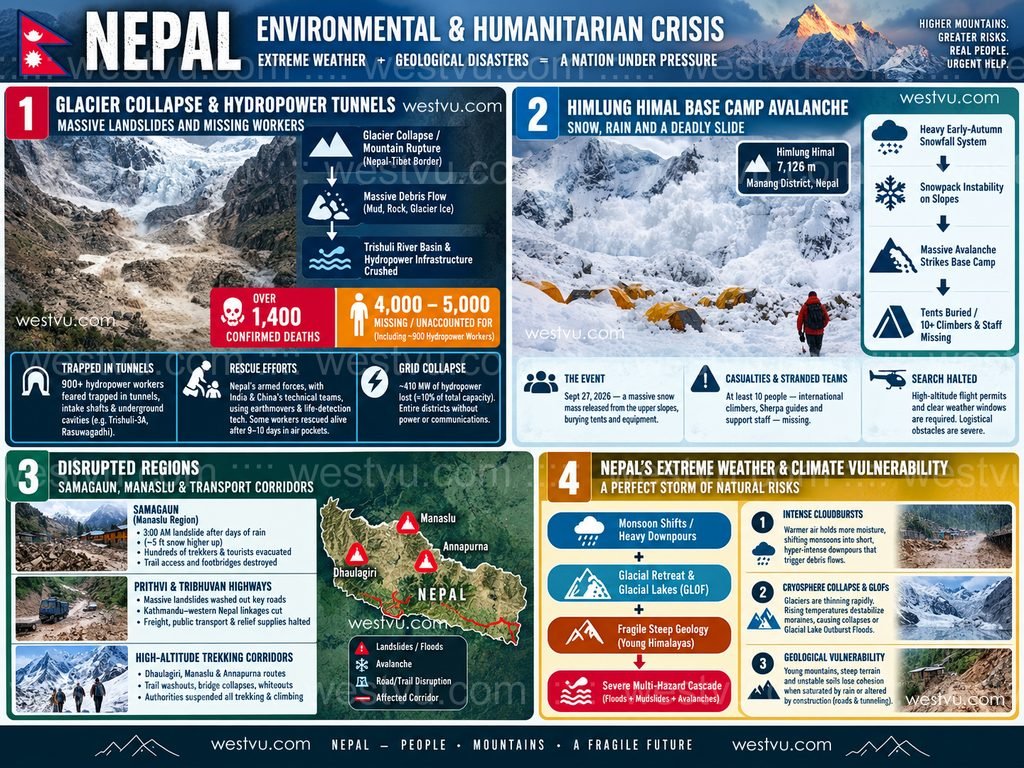
1. Glacier Collapse & Hydropower Tunnels: Massive Landslides and Missing Workers
In late August 2026, a massive glacier collapse along the high-altitude Nepal-Tibet border triggered a catastrophic deluge of rock, mud, and ice. The sheer velocity of the flash flood sent millions of tons of mountain debris barreling 20 kilometers down river valleys, dropping 1,700 meters in mere minutes and crushing infrastructure along the Trishuli River basin.
Key Impacts
- Casualties & Missing: The death toll has surpassed 1,400 people, while between 4,000 and 5,000 individuals remain unaccounted for or missing across Nepal and neighboring Tibet.
- Trapped in Tunnels: Over 900 hydropower project workers were initially feared trapped inside underground tunnels, intake shafts, and subterranean mining/construction cavities across half a dozen projects (such as Trishuli-3A and Rasuwagadhi). Heavy mudslides and boulders completely blocked the tunnel portals, creating sealed underground chambers.
- Rescue Efforts: Armed forces from Nepal, supported by specialized technical teams from India and China, have been conducting round-the-clock excavation operations using earthmovers and life-detection technology. While remarkable rescues occurred, such as workers pulled out alive after up to 9–10 days trapped in air pockets, heavy rain, overflowing barrier lakes, and secondary landslide threats continue to stall recovery efforts.
- Grid Collapse: The disaster knocked out roughly 410 MW of hydropower generation, damaging around 10% of Nepal’s total grid capacity and leaving entire districts without power or communications.
2. Himlung Himal Base Camp Avalanche
Adding to the regional crisis, a massive avalanche struck the base camp of Himlung Himal (7,126 m) in Nepal’s Manang district.
- The Event: Driven by days of persistent rain and sudden heavy snowfall, a huge snow mass released from the upper slopes on September 27, 2026, burying tents and equipment at the expedition base camp.
- Casualties & Stranded Teams: At least 10 people, including international high-altitude climbers, local Sherpa guides, and support kitchen staff, were reported missing after being buried under snow.
- Halted Search: Most expedition teams had previously retreated down the mountain following severe weather warnings. However, search and rescue attempts at the base camp face severe logistical obstacles, as high mountain air access requires specialized high-altitude flight permits and clear weather windows.
3. Disrupted Regions: Samagaun, Manaslu & Transport Corridors
Continuous late-monsoon downpours and early autumn snow systems have cut off several remote valleys, leaving hundreds of local residents and foreign trekkers stranded.
| Affected Region | Incident / Situation | Status & Impact |
| Samagaun (Manaslu Region) | A major 3:00 AM landslide struck directly above Samagaun village after days of non-stop rain and heavy mountain snow accumulation (~5 feet of snow higher up). | Hundreds of trekkers, support crews, and foreign tourists (including dozens of Israeli hikers) were forced to evacuate lodges. Trail access and footbridges around the village are destroyed, leaving groups stranded waiting for trail restoration. |
| Prithvi & Tribhuvan Highways | Multiple massive landslides washed out key riverbank roads and highway linkages connecting Kathmandu to western Nepal. | Freight, public transport, and disaster relief supply lines are severely throttled or halted. |
| High-Altitude Trekking Corridors | Dhaulagiri, Manaslu, and Annapurna circuit routes have seen severe trail washouts, bridge collapses, and whiteouts. | Tourism and climbing authorities issued nationwide directives urging all operators to suspend climbing and trekking activities. |
4. Nepal’s Extreme Weather & Climate Vulnerability
Nepal is currently experiencing an escalation of compound climate risks. A combination of changing atmospheric patterns and fragile geological features makes the Himalayan country prone to severe natural hazards.
- Intense Cloudbursts: Warmer air holds more moisture, shifting traditional steady monsoon patterns into short, hyper-intense cloudbursts that dump hundreds of millimeters of rain in hours, triggering immediate debris flows.
- Cryosphere Collapse & GLOFs: Glaciers across the Himalayas are thinning rapidly. Rising temperatures destabilize glacial moraines, leading to sudden glacier collapses or Glacial Lake Outburst Floods (GLOFs) that carry enormous kinetic force downhill.
- Geological Vulnerability: As a geologically young mountain range with steep terrain and unstable soil structures, the Himalayas lose slope cohesion rapidly when saturated by rain or altered by heavy construction (such as unmitigated road building and tunneling for hydropower).

News Director – Westvu.com | Geopolitical & Diplomatic Analyst at widge.edu.lk think tank
