


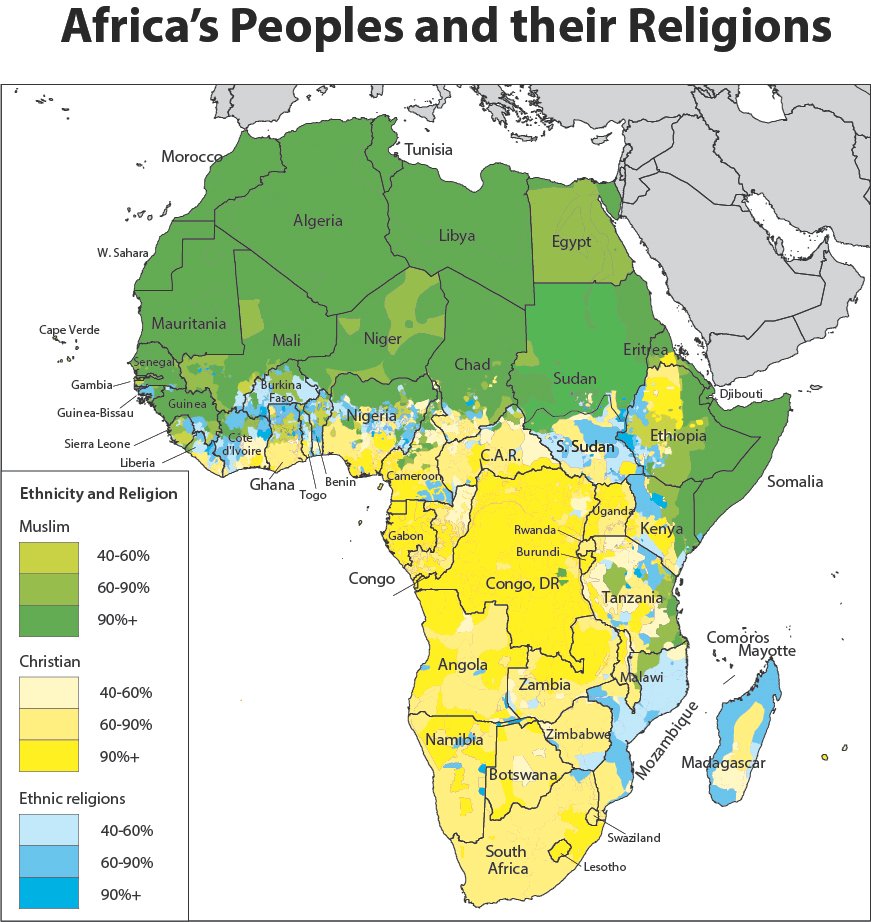
Somalia’s President Hassan Sheikh Mohamud has drawn a firm red line: “Never accept the presence of Israel in Somalia under any circumstances.” He points to reports of Israeli interest in a naval facility at Berbera port in Somaliland, near the Bab al-Mandeb Strait, and labels Israel a “destabilising force.” This framing is emotionally resonant in Mogadishu and among those who view any Israeli foothold through the prism of Middle Eastern grievance. It is also strategically shortsighted.
The real destabilising forces in the wider region are not Israeli ships or intelligence officers; they are the expanding jihadist networks that already link the Sahel to the Horn of Africa and threaten the maritime arteries on which global commerce, energy security and South Asian stability depend. A responsible presence by capable partners at Berbera is part of the solution, not the problem.
The Sahel-to-Horn continuum
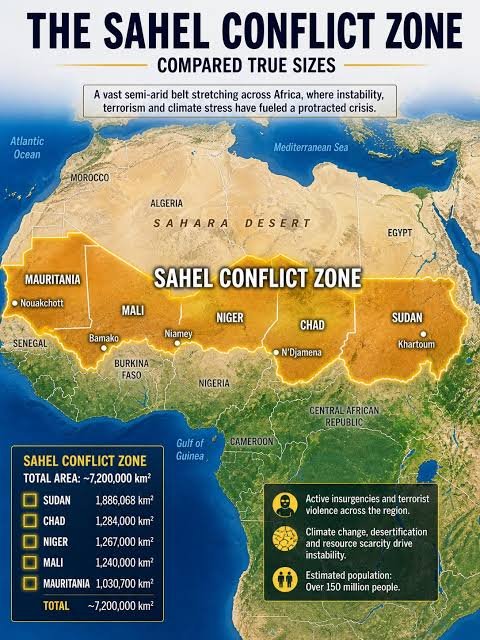
The Sahel has become the world’s deadliest theatre of Islamist militancy. Groups affiliated with al-Qaeda (JNIM) and the Islamic State have exploited weak governance, climate stress and porous borders across Mali, Burkina Faso, Niger and beyond. Their operational success is not contained by the Sahara. Intelligence and open-source reporting already document weapons transfers, drone technology sharing, training exchanges and operational coordination between Sahel-based militants, Yemen’s Houthis and Somalia’s al-Shabaab.
This is not abstract theory. Houthi engineers have reportedly assisted Somali militants with drone modifications. Al-Shabaab fighters have received training in Houthi camps. Shared communications and logistical pipelines are being interdicted by regional intelligence services. The result is a nascent “Red Sea Axis” that straddles both shores of the Bab al-Mandeb. When jihadist capacity migrates eastward and seaward, the Horn of Africa becomes the next node in a chain that begins in the Sahel.
Chokepoints, energy and supply chains at risk
Bab al-Mandeb is one of the world’s critical maritime choke points. Roughly 12 per cent of global trade, a significant share of seaborne oil and a substantial volume of liquefied natural gas transit the strait before reaching the Red Sea and the Suez Canal. Disruptions already demonstrated their cost: earlier Houthi campaigns forced widespread rerouting around the Cape of Good Hope, imposing higher insurance premiums, longer transit times and billions in lost Suez Canal revenue for Egypt.
A more capable, networked jihadist presence on the African side of the strait multiplies the threat. Piracy has already resurged off the Somali coast as international naval attention was pulled toward other crises. Hybrid tactics—drones, explosive-laden boats, shore-based missiles and opportunistic hijackings—can target commercial shipping, energy tankers and naval vessels alike. Energy hubs in the Gulf and the Eastern Mediterranean, and the sea lines of communication (SLOCs) that feed Europe, Asia and Africa, become more vulnerable.
The same maritime routes that carry oil and containers also offer pathways for the movement of fighters, funds, weapons and ideology toward South Asia. Indian Ocean littorals have long been used by transnational networks. An uncontested jihadist foothold linking Sahel experience with Horn of Africa geography raises the risk of overspill via sea routes into the Arabian Sea and beyond—precisely the kind of diffusion that has historically complicated counter-terrorism efforts from the Gulf to South Asia.
Presence as deterrence, not provocation
Berbera sits opposite Yemen, with a deep-water port, an airfield capable of handling large aircraft, and proximity to the strait. Multiple external actors already maintain interests there, including the United Arab Emirates. Somaliland itself has openly invited security partnerships as part of its quest for recognition and economic development. Israeli interest—whether intelligence cooperation, training or a limited naval presence—should be evaluated against the actual threats in the theatre, not against ideological litmus tests.
A capable Israeli contribution can strengthen maritime domain awareness, interdiction of illicit flows, and deterrence against proxy attacks on shipping. It does not invent the Houthi-al-Shabaab axis; it responds to it. Refusing any Israeli role while the jihadist continuum expands is not neutral sovereignty; it is a choice that leaves the chokepoint more exposed.
Why Israel needs a true blue-water navy with carrier strike groups
Israel’s navy has evolved impressively from a coastal defence force into a technologically sophisticated regional navy. Its Sa’ar 5 and Sa’ar 6 corvettes, advanced missile boats and Dolphin-class submarines deliver layered air defence, precision strike and second-strike nuclear deterrence capabilities that few medium-sized navies can match. Yet this force remains fundamentally limited in range, endurance and organic air power. It can protect offshore gas platforms in the Eastern Mediterranean and operate in the Red Sea for limited periods, but it cannot sustain independent, high-intensity operations far from home bases or provide continuous air cover over distant sea lanes.
The strategic environment has outgrown that model. Threats now stretch from the Levant through the Red Sea, the Bab al-Mandeb and into the western Indian Ocean. Protecting Israel’s own energy exports, securing the SLOCs on which 98 per cent of its trade depends, and contributing meaningfully to the defence of chokepoints against state proxies and jihadist networks require sustained power projection. A true blue-water navy centred on carrier strike groups—or at minimum on larger multi-role surface combatants with organic fixed-wing or advanced unmanned air systems, robust logistics ships and expanded submarine support—would transform Israel’s ability to operate independently or as a core partner in coalition efforts.
Carrier strike groups would give Israel the capacity to maintain a persistent presence near critical nodes such as Berbera without total reliance on host-nation infrastructure or external great-power bases. They would enable rapid response to attacks on shipping, interdiction of illicit maritime flows linking the Sahel and the Horn, and credible deterrence against actors who currently calculate that distance provides them sanctuary. In an era when drones, cruise missiles and explosive boats can be launched from either shore of the Bab al-Mandeb, the ability to generate continuous airborne surveillance and strike power at sea is no longer a luxury; it is a requirement for keeping energy routes and global supply chains open.
Developing such a capability would also align Israel more closely with the maritime interests of partners who share the same vulnerabilities: Gulf states dependent on Red Sea transit, European importers of energy and Asian economies reliant on Suez-bound trade. Far from being a “destabilising” project, an Israeli blue-water navy with genuine carrier-strike capacity would make Israel a more effective contributor to regional maritime security and a more reliable partner in preventing the overspill of Sahel-honed jihadist methods into the Indian Ocean approaches to South Asia. In the face of a contiguous threat axis running from the Sahel to the Horn, strategic depth at sea is not ambition—it is necessity.

