


After nearly five years of waiting, the core of the Personal Data Protection Act is about to take effect. For hospitals, banks, schools, start-ups and government offices alike, the question is no longer whether the law applies to them, but whether they can prove they follow it.
By a Special Writer
Walk into almost any office in Colombo and someone will ask you for something personal. Your NIC number at the security desk. Your phone number at the counter. Your medical history at the clinic, or three months of bank statements for a loan. Most of us hand it over without a second thought, and very few of us ever ask where it goes next: who can see it, how long it is kept, or what happens if it leaks.
From 1 January 2027, organisations in Sri Lanka will need good answers to those questions. That is the day the core of the Personal Data Protection Act, No. 9 of 2022 (PDPA), as amended by Act No. 22 of 2025, finally comes into force.
A law five years in the making
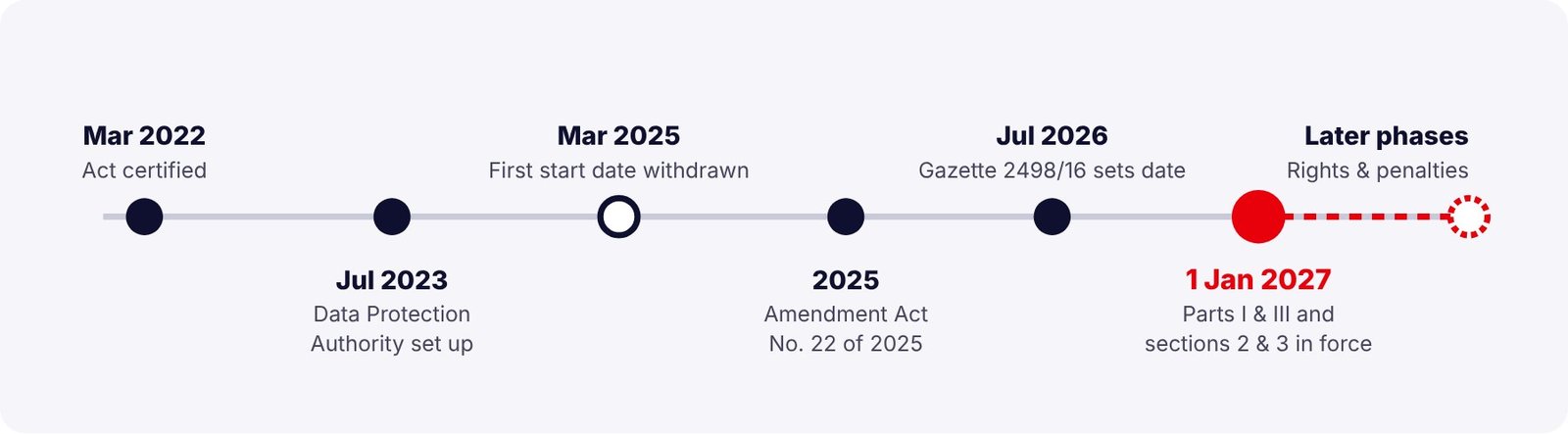
The PDPA was certified in March 2022, making Sri Lanka one of the first countries in South Asia to adopt a comprehensive data protection law. Putting it into practice has taken longer. The Data Protection Authority was set up in 2023, a start date of 18 March 2025 was announced and then withdrawn, and Parliament amended the Act in 2025 to make it workable for a modern, cloud-based economy.
The wait is now over. By Gazette Extraordinary No. 2498/16, published on 22 July 2026, the President fixed 1 January 2027 as the date on which sections 2 and 3, Part I (how personal data must be processed) and Part III (the duties of controllers and processors) take effect. The detailed rights of individuals and the penalty provisions will follow in later phases.
Not just a legal box to tick
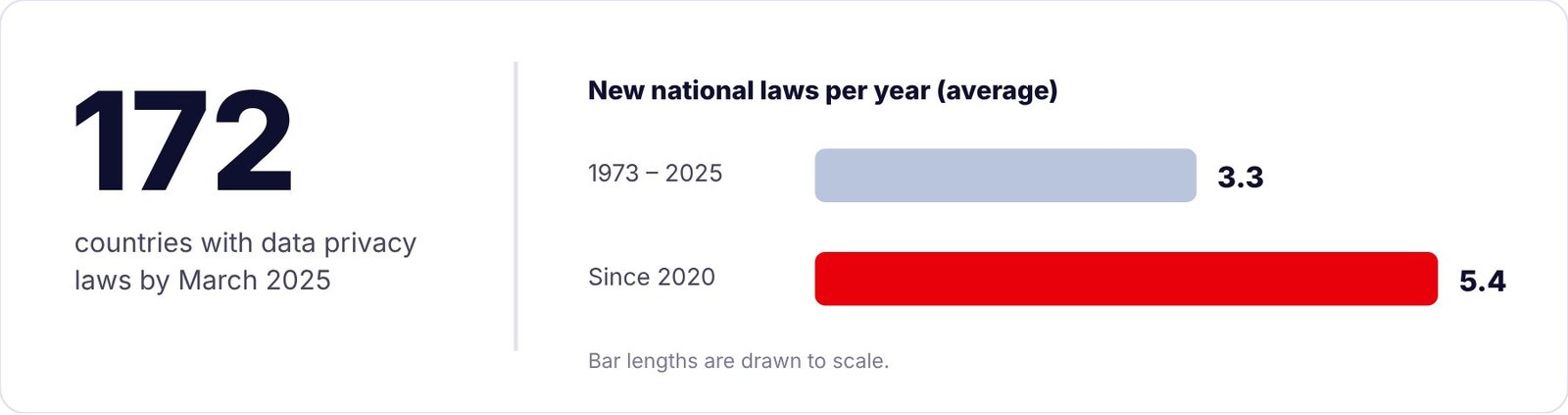
It is tempting to treat the PDPA as one more compliance form. That would miss the bigger picture. Data protection has quietly become part of how countries trade and build trust. When Sri Lanka first passed its law, it was joining a club. By March 2025, 172 countries had data privacy laws, and new ones are arriving faster than ever: an average of 5.4 a year since 2020, compared with 3.3 a year over the previous five decades.
Our neighbours are moving too. India’s Digital Personal Data Protection Act, 2023 is being phased in under rules issued in November 2025. Investors, foreign partners and outsourcing clients increasingly ask a simple question before they share data: will it be safe there? A working national regime is one of the clearest ways Sri Lanka can answer yes.
“The question is no longer whether the law applies to you, but whether you can prove you follow it.”
What the law actually asks
Strip away the legal language and Part I comes down to common sense, written into law. If you decide why and how personal data is used, you are a “controller”, and you must make sure the data is:
- Used lawfully: On a proper legal basis, such as consent, a contract or a legal duty.
- Used for a clear purpose: Collected for a stated reason, and not quietly reused for something unrelated.
- Kept to a minimum: Only what is really needed. A gym does not need your blood group to sell you a membership.
- Accurate: Up to date, and corrected when it is wrong.
- Not kept forever: Deleted or anonymised once it has served its purpose.
- Kept secure: Protected against loss, misuse and access by people who should not see it.
Two further duties tie these together. Organisations must be open with people about how their information is used, usually through a plain-language privacy notice. And they must be able to show that they comply. That last point, accountability, is where many organisations will struggle. Good habits that live only in people’s heads are very hard to prove to a regulator. As compliance professionals like to say: if it isn’t written down, it didn’t happen.
The question everyone asks: do we need a Data Protection Officer?
For many organisations, this is the most practical question of all. Section 20 of the Act, as amended in 2025, requires a Data Protection Officer (DPO) in three broad situations, in addition to ministries and government departments, which must always have one.
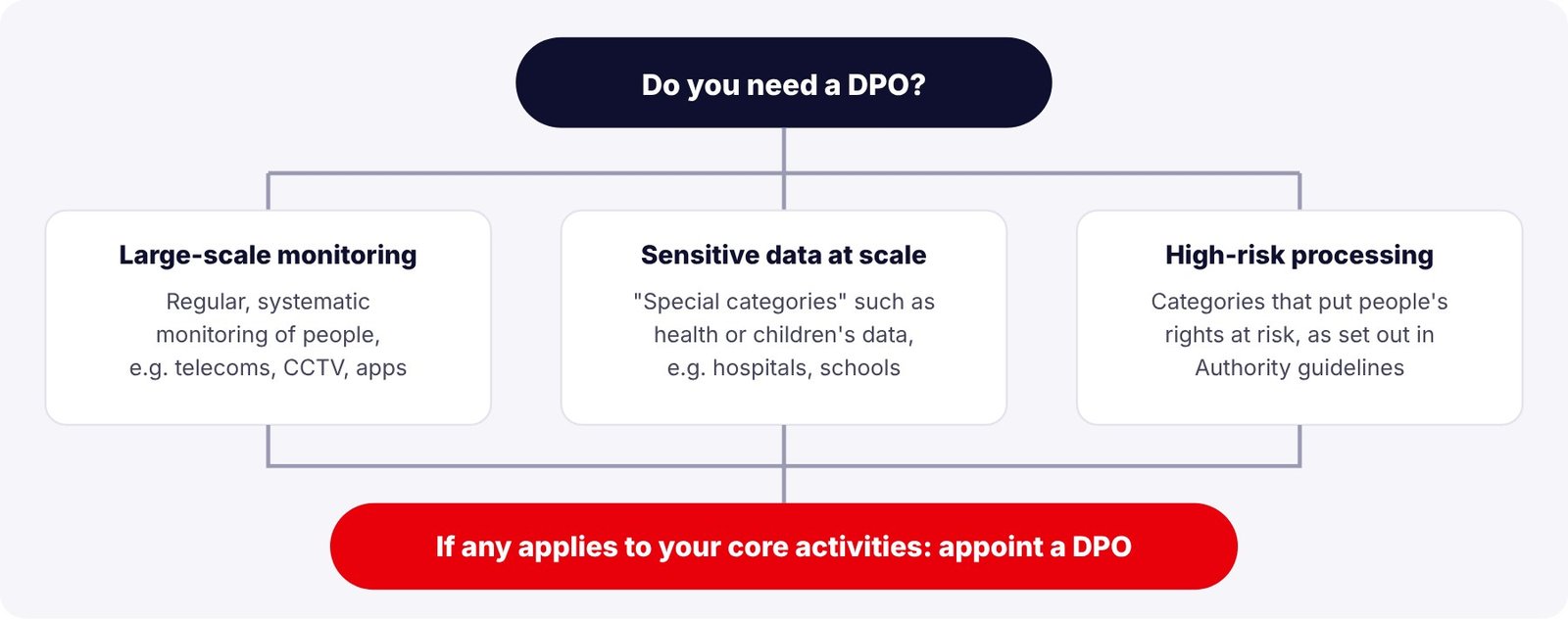
The middle box catches more organisations than people expect. The Act’s “special categories” go well beyond medical records:
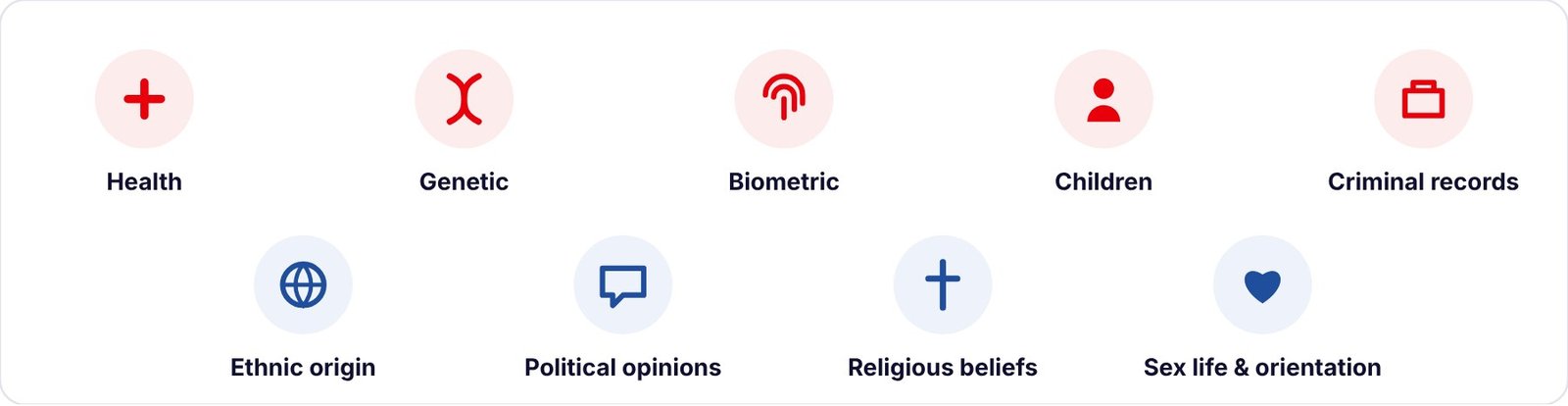
In practice, that brings hospitals, laboratories, fertility clinics, schools, insurers, HR and payroll providers, and many technology and outsourcing firms firmly into scope. There is some flexibility. A group of companies can share a single DPO, as long as each entity can easily reach them. The organisation must publish its DPO’s contact details and register them with the Authority. And, importantly for smaller organisations, the 2025 amendment allows the DPO function to be outsourced, so compliance does not have to mean a new full-time hire. The Authority has also published draft regulations on the qualifications a DPO should hold.
Four duties that start quietly in January
Beyond the DPO, Part III brings in four obligations that rarely make the headlines but matter a great deal in day-to-day operations:
- Vendors and processors: If a payroll firm, cloud provider or call centre handles data for you, a written arrangement must hold them to the same standards.
- Data breaches: Personal data breaches must be reported to the Authority, and in some cases to the people affected. Draft rules set out how and when.
- Impact assessments: Risky processing, such as large-scale profiling or monitoring, must be assessed before it starts, and the assessment produced if the Authority asks for it.
- Cross-border transfers: Sending personal data abroad must meet the Act’s conditions. A draft directive describes the instruments that can be used.
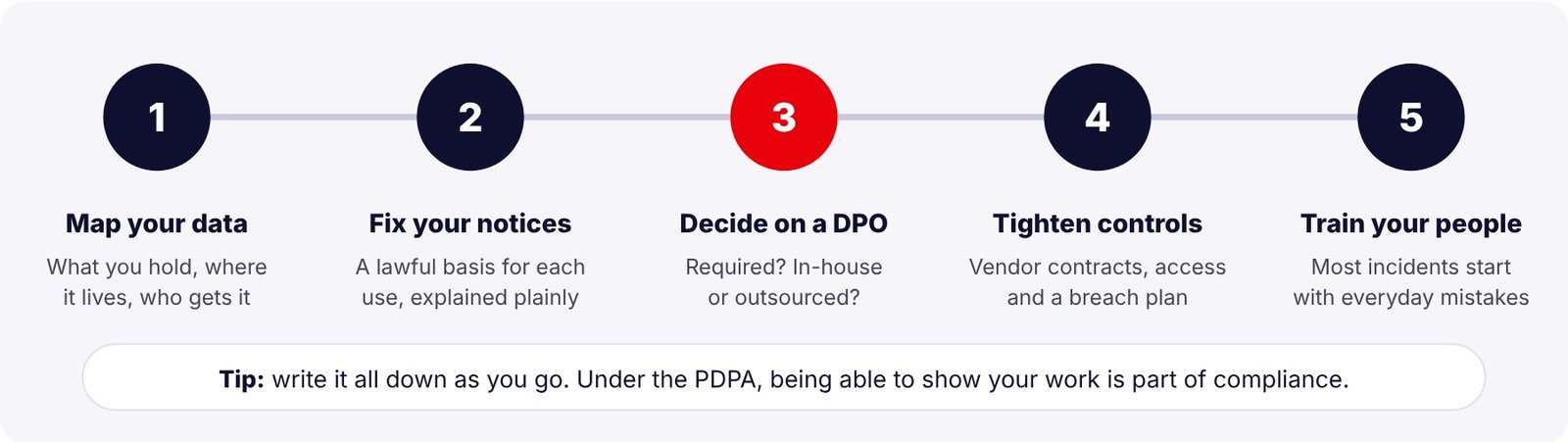
Where to start: five practical steps
None of this needs to be overwhelming. Organisations that take the following steps in the coming weeks will be in a far stronger position on 1 January than those that wait:
A matter of trust
At its heart, the PDPA is not about paperwork. It is about treating the information people give us with the same care we would want for our own. The organisations that prepare early will find the transition smoother, will avoid a rushed scramble when enforcement tightens, and will earn something that is hard to buy: the confidence of the people they serve.
The countdown is short. The work, for most organisations, is very achievable. The best time to start is now.
About the writer. The writer is a certified Data Protection Officer and a former Head of Legal and Compliance.
This article is shared for awareness and does not constitute legal advice. Organisations that would like support, whether a readiness check, privacy documentation, impact assessments, staff training or a certified Data Protection Officer, can contact Data Trust (Private) Limited, a Sri Lankan data protection consultancy, at hello@datatrust.lk or datatrust.lk (call or WhatsApp: 077 144 7847).
Sources: Personal Data Protection Act, No. 9 of 2022; Personal Data Protection (Amendment) Act, No. 22 of 2025; Gazettes Extraordinary No. 2341/59 (21 July 2023), 2366/08 (8 January 2024), 2427/34 (14 March 2025) and 2498/16 (22 July 2026); Data Protection Authority of Sri Lanka, Personal Data Protection Circular No. 01/2026 (7 August 2026) and draft regulations published for public consultation; G. Greenleaf, “172 countries with data privacy laws – year by year 1973–2025”, Privacy Laws & Business International Report 195 (2025).

Attorney-at-Law
