


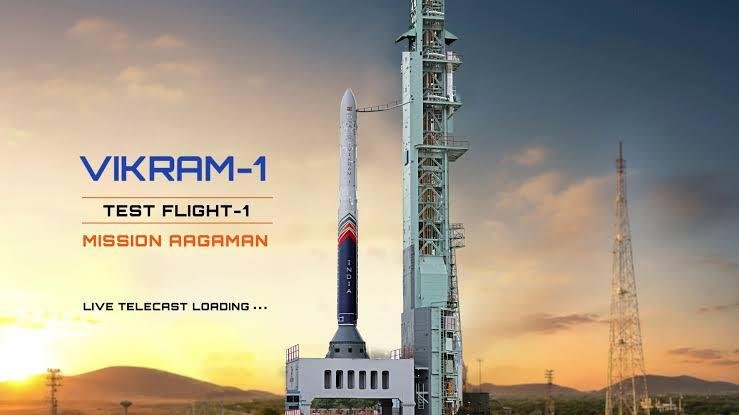
Globally, there are only three to four nations that possess private companies capable of sending a launch vehicle into Earth’s orbit. Overall, only nine sovereign entities have achieved orbital launch capability: the United States, Russia, China, Japan, South Korea, Israel, India, New Zealand, and the European Union. Historically, all these achievements were realised through state-owned institutions.
Theoretically, four of these nations now boast private entities with this capability. However, regarding China, a poignant question arises as to whether its private companies are truly private. This is why the term “theoretically” is essential. These Chinese firms operate using state funds, under state supervision, and in alignment with a broader government agenda. Furthermore, the fact that China has established exactly four companies to mirror the four prominent firms in the United States raises valid suspicions. Nevertheless, for the peace of mind of those who romanticise the rise of Asia and the Global South, we shall theoretically count them as four:
- United States: SpaceX, Rocket Lab USA, Firefly Aerospace, Blue Origin
- China: LandSpace, Galactic Energy, Space Pioneer, iSpace
- New Zealand: Rocket Lab NZ Ltd (a subsidiary of the US parent company)
- India: Skyroot Aerospace
The world’s first private space enterprise was OTRAG, founded in West Germany in 1975. Although it was wound up in the 1980s, it remains etched in history as a testament to West German capitalism and entrepreneurial spirit.
Following in those footsteps, SpaceX emerged as the true pioneer of modern private spaceflight. Elon Musk once remarked that he was deeply saddened when his childhood hero, Neil Armstrong, expressed fierce opposition to private space companies. Armstrong serves as an example of how mainstream education, even in America, was influenced by Soviet-style thinking during a certain era. Anticipating the inevitable counterarguments from local academics who view history through a specific lens, I researched Armstrong’s educational background. He studied at Purdue University in Indiana around 1947. Whilst it is difficult to verify his exact lecture timetable, historical records confirm that several professors from the Soviet Union were teaching at that university during that period.
A defining moment in private space history occurred in December 2010, just before the launch of the Falcon 9 rocket. Engineers discovered a crack in the engine skirt of the spacecraft. Under standard protocol, mainstream NASA-trained engineers would postpone the launch to manufacture a replacement. That is the traditional procedure taught in orthodox engineering.
Instead, Elon Musk instructed his team to investigate whether the damaged section could simply be trimmed off. Ultimately, Musk’s unconventional method was deployed. Despite the shortened engine skirt, the mission was a resounding success.
While traditional critics often dismiss Elon Musk as merely an arrogant billionaire, he continuously disrupts established knowledge systems and mainstream norms to achieve his goals. When a journalist once asked him where he had studied aerospace technology, his reply was simple: “I taught myself.”
This is precisely why one Elon Musk can be more valuable to the world than ten thousand conventional rocket scientists. It is high time we abandon the foolish notion that the state must control every sector, and instead allow the private sector to lead the way forward.
News Director – Westvu.com | Geopolitical & Diplomatic Analyst at widge.edu.lk think tank