


Sri Lanka’s new terrorism bill must be judged by both the security it provides and the constitutional discipline under which that security is exercised
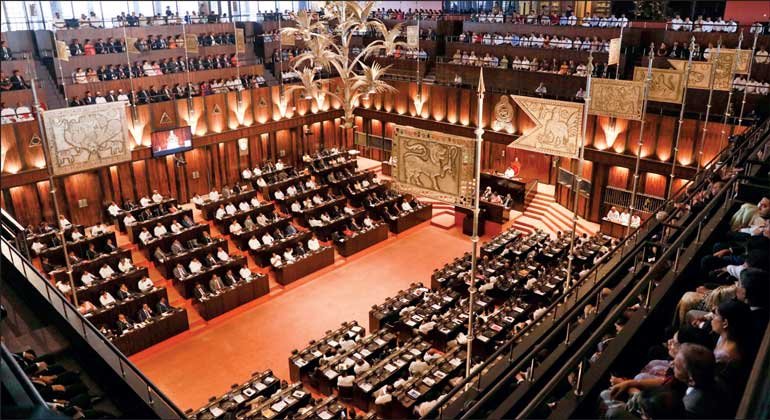
Sri Lanka has once again reached a critical point in the long debate over how a democratic State should protect itself from terrorism.
The Government has gazetted the proposed Protection of the State from Terrorism Bill, intended to repeal and replace the Prevention of Terrorism (Temporary Provisions) Act No. 48 of 1979. The Bill is designed to establish a new framework for detecting, identifying, arresting, detaining, investigating, prosecuting and punishing persons involved in terrorism-related offences. It now enters the parliamentary process.
The important question, therefore, is not simply whether Sri Lanka needs a counter-terrorism law.
It plainly needs the legal capacity to prevent terrorism.
The more difficult constitutional question is this:
How can the State acquire effective preventive powers without allowing exceptional security powers to become a substitute for ordinary constitutional government?
That is the question Parliament, the judiciary, security institutions and the public must examine carefully.
Terrorism cannot be understood only as an attack
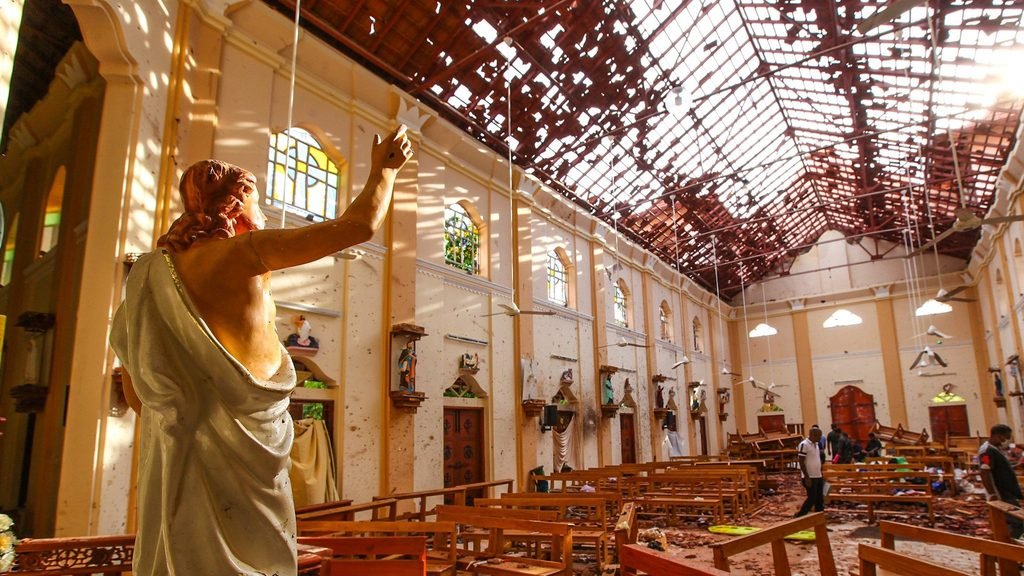
Sri Lanka’s experience demonstrates that terrorism is not limited to the moment when a bomb explodes or an armed attack takes place.
The LTTE experience demonstrated the importance of financing, recruitment, logistics, overseas networks, weapons procurement, maritime capabilities and organised support structures.
The Easter Sunday attacks demonstrated a different dimension: radicalisation, extremist ideology, international connections, individual and networked actors, financing and failures in converting intelligence into timely preventive action.
The security lesson is therefore straightforward.
A modern counter-terrorism framework must be capable of acting before the final attack occurs.
The newly gazetted Bill reflects this preventive approach. It covers not only completed terrorist acts but also attempts, conspiracies and preparations, as well as recruitment, financing, training and other forms of support for proscribed organisations. It also addresses terrorism involving critical infrastructure, serious environmental damage and certain cyberattacks.
This is significant because the security environment has changed.
The terrorist threat of the future may not resemble the terrorist threat of the past.
A terrorist network may operate through encrypted communications, international finance, online propaganda, cyber infrastructure, criminal networks and individuals who never resemble a conventional militant organisation.
Counter-terrorism law therefore has to follow the architecture of the threat.
But prevention must remain law
The existence of a security threat does not suspend the Constitution.
Sri Lanka’s constitutional structure places sovereignty in the People. Article 3 identifies sovereignty as including the powers of government, fundamental rights and the franchise. Article 4 establishes the manner in which those powers are exercised, including executive power relating to the defence of Sri Lanka.
At the same time, fundamental rights and constitutional safeguards remain part of the same constitutional order.
This creates an important principle:
National security and constitutional liberty are not necessarily competing constitutional objectives.
The State has a duty to protect its people. The State also has a duty to exercise that protective power according to law.
Article 28 is particularly important to this discussion because it expressly states that the exercise and enjoyment of rights and freedoms are inseparable from the performance of duties and obligations.
This means that the constitutional conversation should not be reduced to “security versus rights”.
A more complete formulation is:
security through constitutional government.
The real test is the definition of terrorism
Every counter-terrorism law ultimately depends upon one question: what exactly constitutes terrorism?
If the definition is too narrow, authorities may be unable to intervene before violence occurs.
If it is too broad, ordinary political activity could potentially enter the security sphere.
The present Bill attempts to draw distinctions by identifying terrorism in connection with objectives such as creating public terror or compelling a government or international organisation to act or refrain from acting for a political or ideological objective. It identifies serious consequences including death, grievous injury, hostage-taking, major infrastructure damage and specified cyber-related conduct.
At the same time, the Bill expressly states that peaceful protest, strikes, trade-union activity, advocacy, dissent, journalism, academic research and other forms of expression do not by themselves constitute terrorism offences, subject to the Bill’s conditions concerning intentional incitement of terrorism.
That distinction is fundamental.
A democracy must be able to distinguish between dissent and terrorism, criticism and incitement, protest and violent mobilisation, political disagreement and an organised terrorist operation.
The existence of disagreement with government cannot itself become a national-security indicator.
The security indicator must arise from demonstrable conduct connected to terrorism.
Detention powers require particular scrutiny
The most sensitive part of any preventive security law is not its statement of purpose but the power to deprive a person of liberty before conviction.
The proposed framework provides for detention orders, judicial involvement in extensions, access to lawyers, notification of relatives and the Human Rights Commission, medical safeguards and an Independent Review Committee. According to reporting on the gazetted Bill, an initial detention order can last up to two months, while extensions beyond the initial period require High Court approval, with an aggregate limit of one year from the initial detention order.
These safeguards matter.
But their existence on paper is only the beginning.
The effectiveness of constitutional safeguards depends on how independently and consistently they operate in practice.
The question Parliament should therefore ask is not merely whether a safeguard exists.
It should ask:
Who exercises the power?
What information must justify it?
What evidence must be disclosed?
Who independently reviews the decision?
How quickly can an unlawful detention be challenged?
What remedy exists when the power is misused?
And what institutional record is created for subsequent parliamentary and judicial scrutiny?
These are not obstacles to national security.
They are mechanisms for ensuring that national-security powers retain legitimacy and remain directed towards genuine security threats.
Intelligence must lead to prevention
There is another lesson Sri Lanka should not overlook.
Counter-terrorism legislation cannot compensate for intelligence failure.
The essential national-security chain is:
Information → Verification → Intelligence Analysis → Threat Assessment → Legal Assessment → Decision → Operational Response → Judicial Process.
A warning that remains inside an intelligence file is not prevention.
A threat assessment that never reaches the decision-maker is not prevention.
The new legal framework should therefore be accompanied by stronger intelligence coordination, secure information-sharing mechanisms, financial intelligence, cyber capability, border and maritime intelligence, and professional analytical standards.
The purpose of a central information system should not simply be to collect more information.
Its purpose should be to produce better decisions.
That distinction is critical in the age of artificial intelligence, encrypted communications and transnational networks.
Article 9 and the wider constitutional responsibility
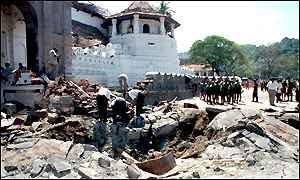
Sri Lanka’s constitutional security discussion also has a distinctive dimension.
Article 9 gives Buddhism the foremost place and places upon the State the duty to protect and foster the Buddha Sasana, while Articles 10 and 14(1)(e) protect freedom of thought, conscience and religion and the manifestation of religion or belief.
This does not transform counter-terrorism legislation into religious legislation.
Rather, it places the protection of Sri Lanka’s constitutional and civilizational heritage within the wider responsibility of the State.
The protection of nationally significant religious and cultural heritage can therefore have both a constitutional and national-security dimension, particularly where deliberate destruction is used to create terror, provoke communal conflict or attack the identity of a society.
But the constitutional answer must remain precise.
The State should target terrorist conduct, terrorist organisation, terrorist financing and terrorist capability—not peaceful religious belief or lawful religious expression.
That distinction is essential to maintaining both security and constitutional order.
The new threat is increasingly hybrid
Sri Lanka must also avoid defining the future entirely through the experience of the LTTE.
The contemporary threat environment may combine terrorism with cyber operations, financial crime, disinformation, online radicalisation, organised crime, foreign networks, technological disruption and attacks on critical infrastructure.
That does not mean every political protest, social movement, economic crisis or information campaign is terrorism.
Such an assumption would itself create a security problem.
The proper analytical question is whether there is demonstrable evidence connecting particular conduct to terrorist intent, capability, organisation, financing or operational preparation.
A sophisticated national-security system must therefore distinguish:
grievance from mobilisation;mobilisation from violent extremism;
violent extremism from terrorism;
political dissent from terrorist activity;
and information warfare from legitimate political communication.
Without these distinctions, preventive security can become indiscriminate.
With them, prevention can become more precise.
Parliament now has an important responsibility
The gazetting of the Bill does not end the debate. It begins the parliamentary phase.
The central task should be neither automatic acceptance nor automatic rejection.
The Bill should be examined provision by provision against four requirements:
First, effectiveness: Can the law actually prevent and prosecute contemporary terrorism?
Second, constitutional compatibility: Are the powers consistent with the Constitution and fundamental rights?
Third, institutional accountability: Are executive, police and intelligence powers subject to meaningful judicial, parliamentary and independent oversight?
Fourth, operational precision: Does the law distinguish genuine terrorist threats from lawful political, religious, journalistic, academic and civic activity?
Sri Lanka has paid a heavy price for terrorism.
It has also experienced the consequences of extraordinary security powers.
A mature constitutional State must learn from both experiences.
The objective should therefore not be a choice between “security” and “freedom”.
The objective should be a legal order in which the State is sufficiently strong to prevent terrorism and sufficiently disciplined to ensure that the power used for that purpose remains within the Constitution.
That is ultimately the meaning of protecting the State.
A State is not protected merely because it possesses greater coercive power.
It is protected when its institutions can identify genuine threats, prevent violence, enforce the law, protect its people, preserve constitutional freedoms and remain accountable for the exercise of power.
The Protection of the State from Terrorism Bill should therefore be judged by one fundamental principle:
Can Sri Lanka protect itself from terrorism without weakening the constitutional order it is supposed to protect?
That is the question that should now guide the national debate.
