
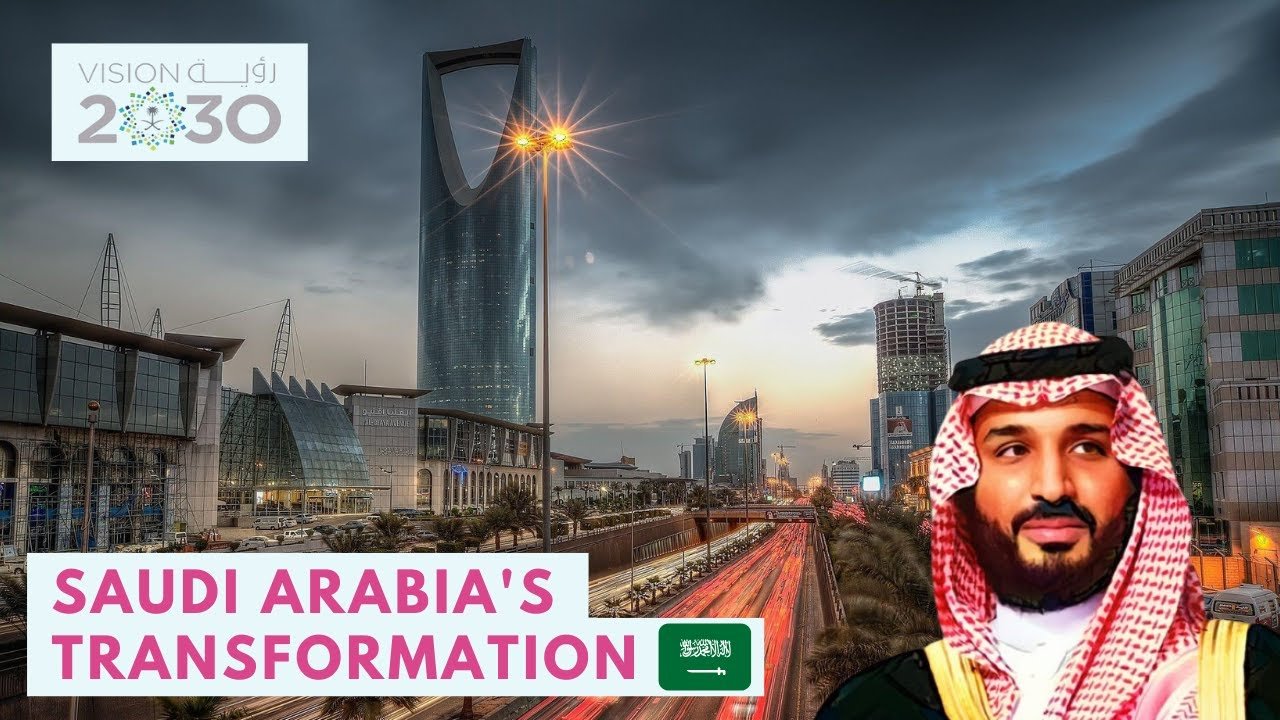
Saudi Arabia has launched a residency programme offering permanent residence to foreigners under three distinct categories. Initially, this opportunity will be granted for a 5-year period. As outlined in the flyer below, the intention is to issue these across three sectors at first, with provisions for extension after five years.
The scheme plans to charge an initial fee of around 4,000 Riyals (1065 USD), approximately 350,000 Sri Lankan Rupees as the visa fee. Under this programme, applicants will also be granted the opportunity to sponsor their family members. Crown Prince Mohammed bin Salman’s (MBS) core objective is to diversify Saudi society.
Application Procedure and Guidelines
Prospective applicants seeking to enroll in the Saudi Premium Residency Programme must submit their applications directly through the official Saudi Premium Residency Portal (pr.gov.sa). Before lodging an application, candidates are strongly advised to thoroughly review the specific eligibility criteria and operational guidelines corresponding to their intended category. Key submission requirements include a passport valid for at least six months, verified proof of financial solvency, a certified medical examination free of communicable diseases, and a clean criminal record clearance. All supporting documentation must be officially translated into Arabic or English, and candidates should account for an initial non-refundable processing fee upon registration.
Why this is important?
In recent years, the MBS administration has taken steps to organise vibrant music and entertainment concerts reminiscent of pre-Islamic Saudi Arabia. Digging up and reviving this ancient Arab culture has drawn fierce opposition from religious factions. Notably, this shift has also caused deep resentment towards MBS among his Saudi fan base in Third World nations.
Furthermore, the city of Riyadh has actively celebrated Halloween, a festival with Christian cultural roots, over the past few years. This, too, faced severe criticism. However, by utilising various strategic approaches to redirect media attention and manage information flows, Riyadh has continuously celebrated Halloween since 2022.
Under these circumstances, establishing an invited foreign resident community is not expected to be overly difficult. It is anticipated that designated, restricted areas will be allocated to these residents to afford them religious freedom. Riyadh is expected to look to the United Arab Emirates as a model nation that has created the necessary social and cultural environment for a population that is 65% foreign, originating from over 190 countries, without compromising its own Arab and Islamic identity.
On the other hand, the Saudi urban population would much like Sri Lankans perceive themselves as deeply traditional Easterners, whilst in reality being heavily Americanised. They maintain a traditional facade and a local appearance only in words and outward expression, whilst thoroughly adopting an American urban lifestyle.
MBS is attempting to put an end to this nominal local charade, seeking instead to normalise the true nature of their society in order to unlock the economic benefits this alignment can bring to the country.
Consider, for example, a village that consumes immense quantities of watermelon whilst publicly claiming it never eats watermelon. If the village casts off the myth of its nominal refusal to eat watermelon, a structured and thriving economic market for watermelon can be developed within that community.
MBS’s Vision 2030 represents an effort grounded in precisely this kind of philosophical foundation.
Saudi Arabia’s attempt to adopt a needlessly nominal anti-Western stance such as establishing the Mecca Pact and entering into a defence agreement with Turkey and Pakistan serves as a clear illustration of the adverse outcomes of such nominal absurdities.
Alienating Western powers that genuinely provide support, as well as Middle Eastern powers such as the UAE and Israel, while drawing closer to nations like Turkey and Pakistan, which merely spout rhetoric about the rise of Eastern Asia in the pseudo-Global South, has proved that the agreement in question was entirely fruitless. Owing to that pact, countries that could have offered real assistance ultimately left Riyadh to stand alone during the Houthis’ crisis.
Consequently, this programme can be described as a clear attempt by MBS to rigorously align these nominal policies with the underlying realities of the world.
HMS Bernard
Gen-Z Geopolitical and Diplomatic Analyst
WestVU Institute for Diplomacy and Geopolitical Expertise (WIDGE)
News Director – Westvu.com | Geopolitical & Diplomatic Analyst at widge.edu.lk think tank
