

Abstract
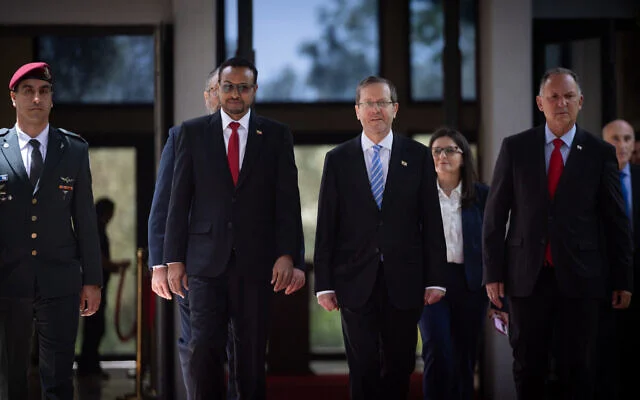
The arrival of Somaliland’s first-ever ambassador to Israel in Jerusalem represents a historic diplomatic milestone not only for Somaliland and Israel, but also for the wider geopolitical architecture of the Horn of Africa and the Middle East. Dr. Mohamed Hagi’s presentation of credentials in Jerusalem marked Somaliland’s first formal ambassadorial deployment to any country in modern history, while simultaneously making him the first ambassador accredited specifically to Israel. The diplomatic symbolism extended even further when Somaliland confirmed that its embassy would be established in Jerusalem, positioning Somaliland as the eighth nation to maintain an embassy in the city and the first Muslim-majority country to formally do so.
This development carries consequences far beyond ceremonial diplomacy. It signals the expansion of the Abraham Accords era into East Africa, reflects the emergence of new geopolitical alignments across the Red Sea corridor, and demonstrates the growing importance of pragmatic diplomacy over ideological rigidity. The event also highlights Somaliland’s long-standing pursuit of international recognition and Israel’s strategy of building strategic partnerships with stable regional actors outside conventional diplomatic frameworks.
This article analyses the diplomatic, geopolitical, security, economic, and ideological significance of Somaliland’s ambassadorial credential ceremony in Jerusalem. It examines how this moment may influence regional power balances, maritime security, African diplomacy, Muslim political discourse, and the future architecture of Israel’s engagement with Africa.
Introduction
Diplomatic history often remembers moments not by the size of the countries involved, but by the symbolic force of the decisions they make. Somaliland’s decision to dispatch its first-ever ambassador to Jerusalem belongs to that category of diplomatic history.
For more than three decades, Somaliland functioned as a de facto independent state after separating from Somalia in 1991. Despite maintaining relative stability, democratic structures, and functioning institutions compared with much of the surrounding region, Somaliland remained outside formal international recognition. Israel’s recognition of Somaliland in late 2025 fundamentally altered this trajectory and initiated a new phase in Horn of Africa diplomacy.
The arrival of Somaliland’s ambassador in Jerusalem therefore represented more than bilateral protocol. It represented the entrance of Somaliland into formal state diplomacy at the ambassadorial level.
The symbolism became even more significant because the ceremony occurred in Jerusalem rather than Tel Aviv. From a pro-Israeli diplomatic perspective, the acceptance of Jerusalem as the operational capital of Israel carries immense strategic and ideological weight. Nations that establish embassies in Jerusalem effectively recognise Jerusalem as the centre of Israeli governmental authority.
In international diplomacy, capitals matter because they define legitimacy, sovereignty, and political recognition. Just as governments worldwide refer to “Washington,” “Beijing,” “Moscow”, or “Tehran” as shorthand for state power, Jerusalem occupies that same governmental role in Israeli political reality.
Somaliland’s diplomatic decision therefore crossed beyond conventional bilateral relations. It challenged long-standing international hesitations surrounding Jerusalem while simultaneously reshaping Muslim-majority diplomatic engagement with Israel.
Somaliland’s Search for Recognition
To understand the importance of the ambassadorial ceremony in Jerusalem, one must first understand Somaliland’s historical position.
Somaliland declared independence from Somalia in 1991 following the collapse of the Somali central government. Since then, Somaliland developed many of the features associated with functional statehood:
- Stable governing institutions
- Electoral processes
- Independent administrative systems
- Separate security structures
- Distinct passport and border systems
- Relative internal stability
- Effective counterterrorism cooperation
While Somalia struggled with insurgency, piracy, factional violence, and governance crises, Somaliland cultivated a comparatively stable political environment.
However, despite these realities, Somaliland remained diplomatically isolated due to concerns surrounding African border precedents and regional fragmentation.
Israel’s recognition changed this equation dramatically.
Recognition by Jerusalem gave Somaliland not merely symbolic validation but entry into the formal architecture of sovereign diplomatic relations. The appointment of an ambassador transformed Somaliland from a partially acknowledged regional actor into a participant within classical state diplomacy.
This explains why the ambassadorial credential ceremony carried such importance. The presentation of credentials is one of the oldest and most sacred rituals in diplomacy. It formally establishes state-to-state relations through personal representation.
Dr. Mohamed Hagi therefore became not only Somaliland’s representative to Israel but also the first ambassador in Somaliland’s modern diplomatic history.
That distinction alone gives the moment enduring historical significance.
Why Jerusalem Matters
The decision to establish Somaliland’s embassy in Jerusalem elevated the event from historic to strategically transformative.
Jerusalem is not merely another city in diplomatic discourse. It is the political, spiritual, and symbolic centre of Israeli sovereignty.
Most states historically avoided establishing embassies in Jerusalem due to international disputes surrounding the city’s status. Even countries maintaining strong relations with Israel often preferred embassies in Tel Aviv as a compromise between practical cooperation and international caution.
Somaliland rejected that cautious approach.
By openly announcing that its embassy would be located in Jerusalem, Somaliland effectively aligned itself with Israel’s position regarding the city’s governmental status.
This had several consequences.
First, Somaliland became the eighth country to establish an embassy in Jerusalem, surpassing countries such as Costa Rica and Argentina in the symbolic diplomatic race surrounding embassy positioning.
Second, Somaliland became the first Muslim-majority country to establish an embassy in Jerusalem.
This is particularly significant because much of the modern Muslim diplomatic consensus historically opposed recognition of Jerusalem as Israel’s capital.
Somaliland’s decision therefore represented a major ideological departure from traditional regional alignments.
Third, the decision signalled the expansion of pragmatic diplomacy within parts of the Muslim world. Somaliland prioritised state interests, strategic partnerships, and geopolitical opportunity over inherited ideological frameworks.
This mirrors broader changes already visible through the Abraham Accords, where several Arab governments increasingly pursued relations with Israel based on security, technology, trade, and strategic cooperation rather than purely ideological confrontation.
Somaliland’s case is even more remarkable because it emerged not from the Gulf Arab system but from East Africa.
The Horn of Africa and the Red Sea Corridor
The geopolitical significance of Somaliland cannot be separated from geography.
Somaliland occupies one of the world’s most strategically valuable maritime positions. It sits near the Bab el-Mandeb Strait, which connects the Red Sea to the Gulf of Aden and the Indian Ocean.
This corridor is among the most important shipping routes on earth.
Global trade, energy flows, military logistics, and international maritime security all depend heavily on stability in this region.
The rise of Houthi attacks, piracy concerns, and broader instability around the Red Sea increased international interest in reliable regional partners.
From Jerusalem’s perspective, Somaliland offers several strategic advantages:
- Maritime access near major trade routes
- Intelligence cooperation opportunities
- Counterterrorism coordination
- Red Sea security partnerships
- African diplomatic outreach
- Economic and technological cooperation potential
For Somaliland, partnership with Israel offers:
- International legitimacy
- Advanced technological cooperation
- Agricultural expertise
- Water management assistance
- Security cooperation
- Diplomatic visibility
- Potential access to broader Western networks
The relationship therefore reflects strategic complementarity.
Israel gains a stable partner in the Horn of Africa.
Somaliland gains diplomatic elevation and strategic backing.
This mutual benefit helps explain why the relationship progressed rapidly from recognition to ambassadorial exchange.
The Symbolism of the First Ambassador
Diplomatic history frequently remembers first ambassadors because they embody the beginning of entirely new eras.
Dr. Mohamed Hagi’s role carries unusual symbolic weight because he simultaneously became:
- Somaliland’s first ambassador to any country
- Somaliland’s first ambassador to Israel
- The representative of the first Muslim-majority country establishing an embassy in Jerusalem
- A diplomatic bridge between East Africa and Israel
This combination transforms the position from ordinary diplomacy into state-building symbolism.
The ambassador effectively became the physical representation of Somaliland’s international emergence.
His credential ceremony in Jerusalem also demonstrated that Somaliland intends to participate actively in international diplomacy rather than remain merely a regional entity.
The move communicated several messages simultaneously:
- Somaliland seeks global recognition through active diplomacy.
- Somaliland is willing to challenge traditional diplomatic taboos.
- Somaliland prefers pragmatic alliances over ideological isolation.
- Somaliland sees Israel as a strategic gateway into wider international legitimacy.
From Jerusalem’s perspective, receiving Somaliland’s ambassador also carried symbolic value.
It demonstrated that Israel continues expanding diplomatic relationships despite international criticism and regional pressure.
It also reinforced Jerusalem’s long-term strategy of deepening ties with Africa.
Muslim Diplomacy and the Abraham Accords Era
Perhaps the most globally significant aspect of Somaliland’s decision is its religious and civilisational symbolism.
Somaliland is overwhelmingly Muslim.
Historically, many Muslim-majority governments framed relations with Israel through the lens of pan-Arab solidarity, Islamic political identity, or the Palestinian question.
Somaliland’s embassy decision demonstrates the growing diversification of Muslim geopolitical thinking.
This does not necessarily mean abandonment of Palestinian aspirations or support for Ramallah. Rather, it reflects the rise of state-centric pragmatism.
Governments increasingly evaluate relations with Israel through:
- National interests
- Security concerns
- Economic opportunity
- Technological cooperation
- Maritime strategy
- Counterterrorism needs
This represents a broader post-ideological shift.
The Abraham Accords accelerated this transformation by normalising public diplomatic engagement between Israel and several Arab governments.
Somaliland expanded this trend into a new geographical and political sphere.
Unlike Gulf monarchies, Somaliland is an emerging state seeking recognition and survival within a highly competitive geopolitical environment.
Its decision therefore carries different strategic logic.
For Somaliland, partnership with Jerusalem is not merely optional diplomacy. It is part of a broader national strategy for international legitimacy.
Regional Reactions and Strategic Anxiety
Predictably, Somaliland’s diplomatic breakthrough generated strong reactions.
Somalia strongly opposed Israeli recognition of Somaliland and rejected the legitimacy of bilateral agreements between Jerusalem and Hargeisa.
Regional powers also expressed concern regarding:
- Potential shifts in Red Sea security balances
- Israeli strategic presence near the Gulf of Aden
- The precedent of recognition for breakaway territories
- The expansion of Abraham Accords influences into East Africa
Some critics fear that deeper Israel–Somaliland ties could intensify regional rivalries involving Turkey, Iran, Egypt, Gulf states, and other Horn of Africa actors.
However, supporters argue that Somaliland’s stability and cooperative posture may actually contribute positively to regional maritime security.
From a pro-Israeli strategic perspective, Somaliland represents a relatively stable and pragmatic actor within a region often affected by fragmentation and insecurity.
Supporters of the partnership therefore view the embassy opening not as destabilisation, but as the strengthening of an emerging alliance between two states seeking security, legitimacy, and strategic resilience.
The Diplomatic Meaning of Embassy Rankings
The symbolism surrounding Somaliland becoming the eighth nation with an embassy in Jerusalem should not be underestimated.
Embassy positioning in Jerusalem has evolved into a global diplomatic signal.
Countries establishing embassies there communicate several messages simultaneously:
- Recognition of Jerusalem as Israel’s governmental centre
- Confidence in bilateral relations with Israel
- Willingness to diverge from older international diplomatic caution
- Alignment with a more sovereignty-centred interpretation of diplomacy
For smaller or emerging states, such moves can also generate disproportionate international visibility.
Somaliland’s rapid rise into this diplomatic category elevated its international profile overnight.
Passing more established states in the symbolic embassy race reinforced Somaliland’s image as diplomatically bold and strategically ambitious.
In diplomatic politics, symbolism itself becomes power.
Jerusalem and Diplomatic Legitimacy
From the perspective of Israeli statecraft, embassy placements matter because they reinforce Jerusalem’s role as the capital of Israel.
Every credential ceremony held in Jerusalem contributes incrementally to the city’s diplomatic normalisation.
The presence of foreign ambassadors in Jerusalem transforms abstract political claims into lived diplomatic practice.
Governments function through practical realities.
When ambassadors present credentials in Jerusalem, meet officials in Jerusalem, and establish embassies in Jerusalem, they reinforce the city’s operational role within international diplomacy.
This is why Somaliland’s decision carried significance beyond bilateral relations.
It strengthened Jerusalem’s broader diplomatic position.
Implications for the Future
Several long-term implications may emerge from Somaliland’s diplomatic breakthrough.
Expansion of Israeli Influence in East Africa
Jerusalem may deepen engagement with East African states through technology, agriculture, infrastructure, and security cooperation.
Increased Competition in the Horn of Africa
Regional powers may intensify diplomatic and strategic activity around Somaliland and Red Sea corridors.
Momentum for Somaliland Recognition
Other states may reconsider Somaliland’s diplomatic status if the territory continues building formal international relationships.
Redefinition of Muslim Diplomatic Norms
Somaliland’s embassy decision may encourage other Muslim-majority actors to adopt more pragmatic approaches toward Israel.
Strengthening of Maritime Security Cooperation
Israel and Somaliland may collaborate more closely on maritime intelligence, anti-piracy operations, and Red Sea security.
Expansion of Abraham Accords Logic Beyond the Middle East
The Somaliland case demonstrates that the Abraham Accords model can extend beyond Arab politics into broader Afro-Middle Eastern strategic frameworks.
Verdict by Bernard+
The arrival of Somaliland’s first ambassador in Jerusalem marked a transformational moment in modern diplomacy.
It represented the emergence of Somaliland into formal ambassadorial statecraft, the expansion of Israeli influence into the Horn of Africa, and the continued global normalisation of Jerusalem as Israel’s governmental centre.
The significance of the event rests not merely in protocol, but in symbolism.
A Muslim-majority state chose Jerusalem for its first embassy.
A previously unrecognised territory entered formal diplomatic history through partnership with Israel.
A new strategic bridge emerged between East Africa and the Eastern Mediterranean.
For Somaliland, the ceremony represented international visibility, legitimacy, and strategic opportunity.
For Jerusalem, it represented another diplomatic reinforcement of Israel’s capital status and evidence that pragmatic partnerships continue expanding despite geopolitical resistance.
For the wider world, the event illustrated the emergence of a more fluid international order in which smaller states increasingly pursue interest-based diplomacy over inherited ideological alignments.
Diplomatic history frequently turns on moments initially dismissed as symbolic.
Yet symbolism often precedes geopolitical transformation.
The Somaliland ambassadorial credential ceremony in Jerusalem may ultimately be remembered as one of the defining diplomatic moments of the post-Abraham Accords era — a moment when East Africa, the Red Sea, and Jerusalem became linked within a new strategic framework shaping the future politics of the region.

News Director – Westvu.com | Geopolitical & Diplomatic Analyst at widge.edu.lk think tank