
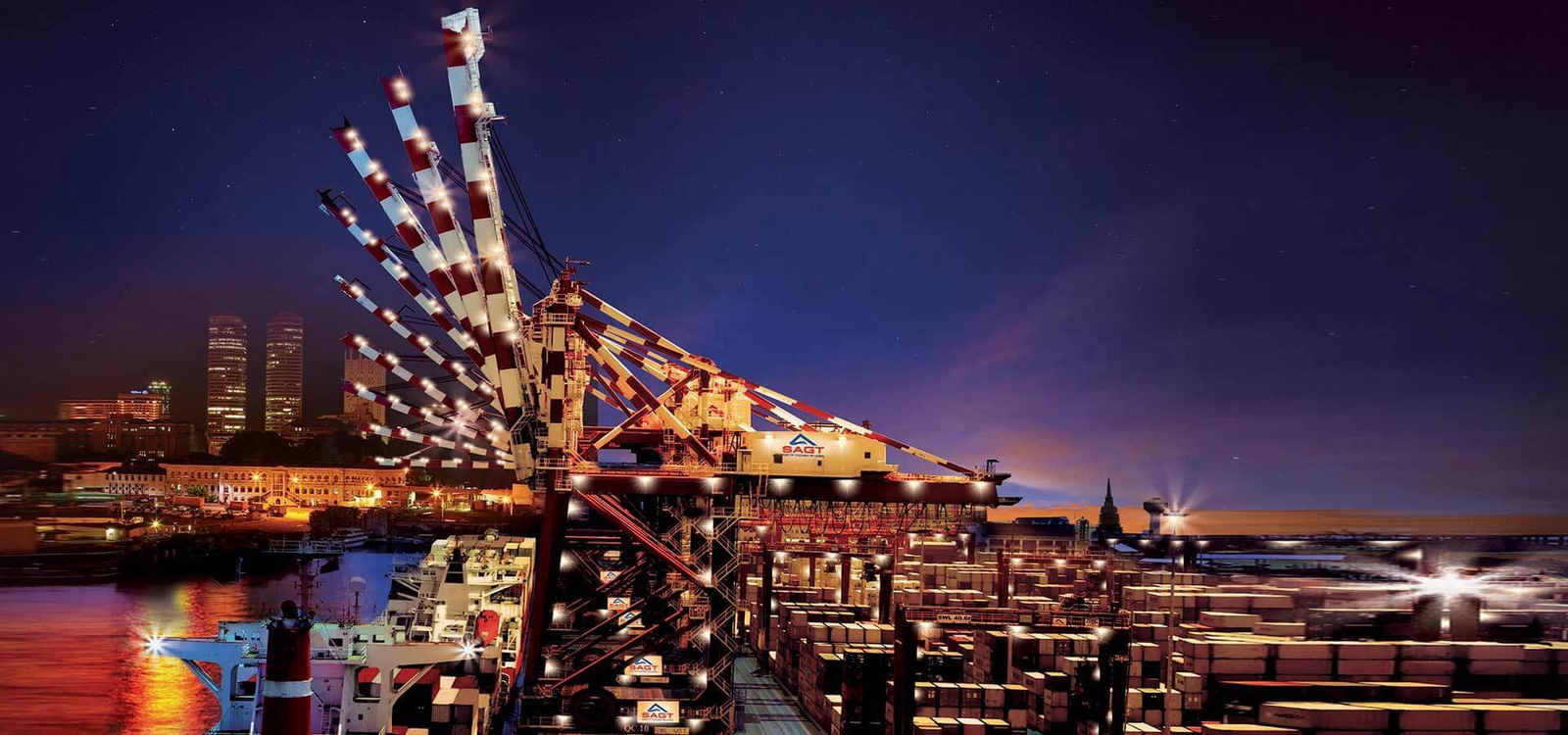
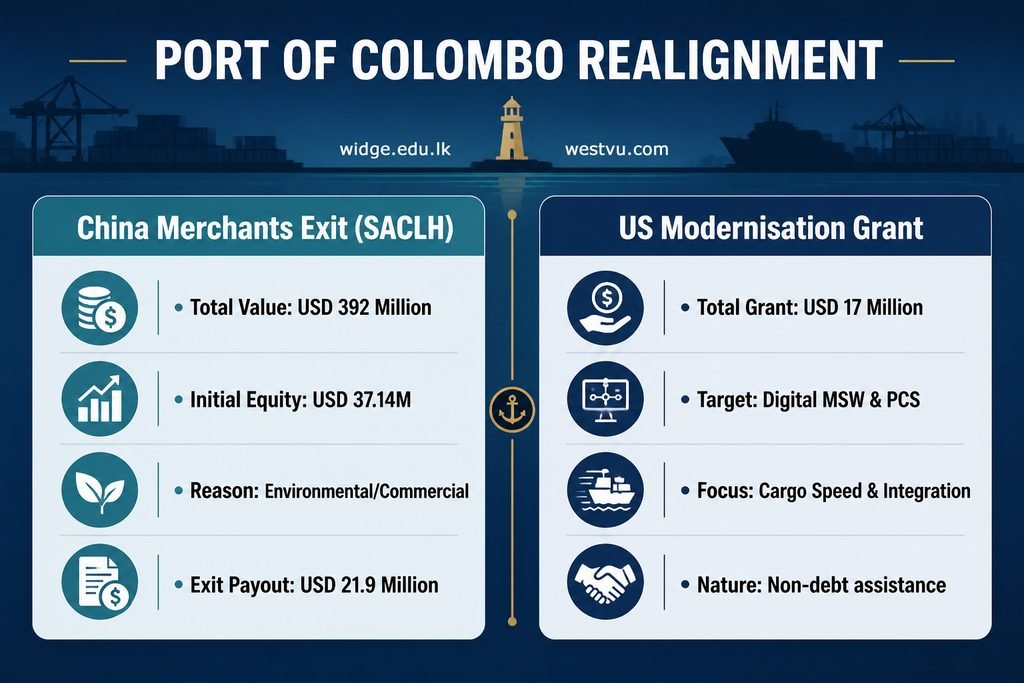
The exit of China Merchants Port Holdings from the proposed USD 392 million South Asia Commercial and Logistics Hub (SACLH) at the Port of Colombo marks a significant turning point in Sri Lanka’s maritime landscape. Under the termination terms confirmed in Hong Kong stock exchange filings, the Sri Lanka Ports Authority (SLPA) agreed to pay USD 21.9 million in compensation to dissolve the project.
To clarify the numbers: USD 392 million represented the total projected, long-term capital cost to construct the five-storey complex over a 50-year Build-Operate-Transfer (BOT) period. The USD 37.14 million figure was the initial equity capital injected upfront by the consortium partners (China Merchants at 70%, SLPA at 15%, and Access Engineering at 15%) to begin preliminary phases.
While some commentators frame this exit as a setback, a broader global view reveals a structural realignment in line with global economic reality.
The USD 17 Million US Investment and Western Re-engagement
Coinciding with the Chinese withdrawal, the United States announced a USD 17 million grant to modernise and digitise operations across the Port of Colombo. Announced by U.S. Ambassador Eric Stern Meyer during talks with the SLPA and the Ministry of Ports and Civil Aviation, this direct grant focuses on upgrading Sri Lanka’s Maritime Single Window (MSW) and Port Community System (PCS).
While analysts query whether growing American influence in Sri Lanka’s critical infrastructure might deter aggressive Chinese capital, this pivot offers clear long-term utility:
- Geopolitical Realism over Debt: Despite years of heavily pro-Chinese political rhetoric during successive administration eras, Beijing notably declined to step in with direct balance-of-payments bailouts or meaningful debt relief during Sri Lanka’s severe 2022 economic crisis.
- Leveraging Primary Export Markets: Western economies led by the United States as the single largest buyer of Sri Lankan apparel and value-added exports hold the ultimate financial levers. Aligning port digital infrastructure with Western trade standards streamlines access to the consumer markets that generate actual foreign currency reserves.
Overblown Fearmongering: The Myth of “Slowing Down China”
The popular narrative that Western involvement aimlessly seeks to “block” or “slow down” Chinese economic momentum misses the mark, much like historical geopolitical anxieties that failed to materialise.
A clear historical parallel can be drawn to 1960s Australia, where commentators panicked over fears that citizens would eventually have to learn Russian due to perceived inevitable Soviet global dominance following the 1962 Cuban Missile Crisis. That existential fear proved unfounded as structural economic realities took over.
Similarly, legacy media frequently portrays Beijing’s economic rise as an unstoppable, linear force that Western involvement merely “delays”. In reality:
- Structural Constraints: China faces its own internal economic rebalancing, real estate debt, and domestic growth slowdowns, forcing a retreat from speculative overseas infrastructure spending.
- Commercial Pragmatism: Projects like the SACLH are being abandoned not due to strategic encirclement but because of commercial unviability, shifting market timelines, and standard financial recalculations.
- Control of Core Infrastructure: Global financial architecture, trade settlement mechanisms, software ecosystems, and primary consumer markets remain predominantly anchored in the West.
Long-Term Value for Sri Lanka
By replacing multi-hundred-million-dollar equity concessions with Targeted Digital Grants, Sri Lanka avoids locking critical port land into 50-year lease agreements. Modernising the digital backbone of the Port of Colombo through a USD 17 million grant lowers turnaround times for shipping lines, removes administrative bottlenecks, and strengthens Colombo’s status as a top-tier global transshipment hub without adding debt to the national balance sheet.
News Director – Westvu.com | Geopolitical & Diplomatic Analyst at widge.edu.lk think tank
