

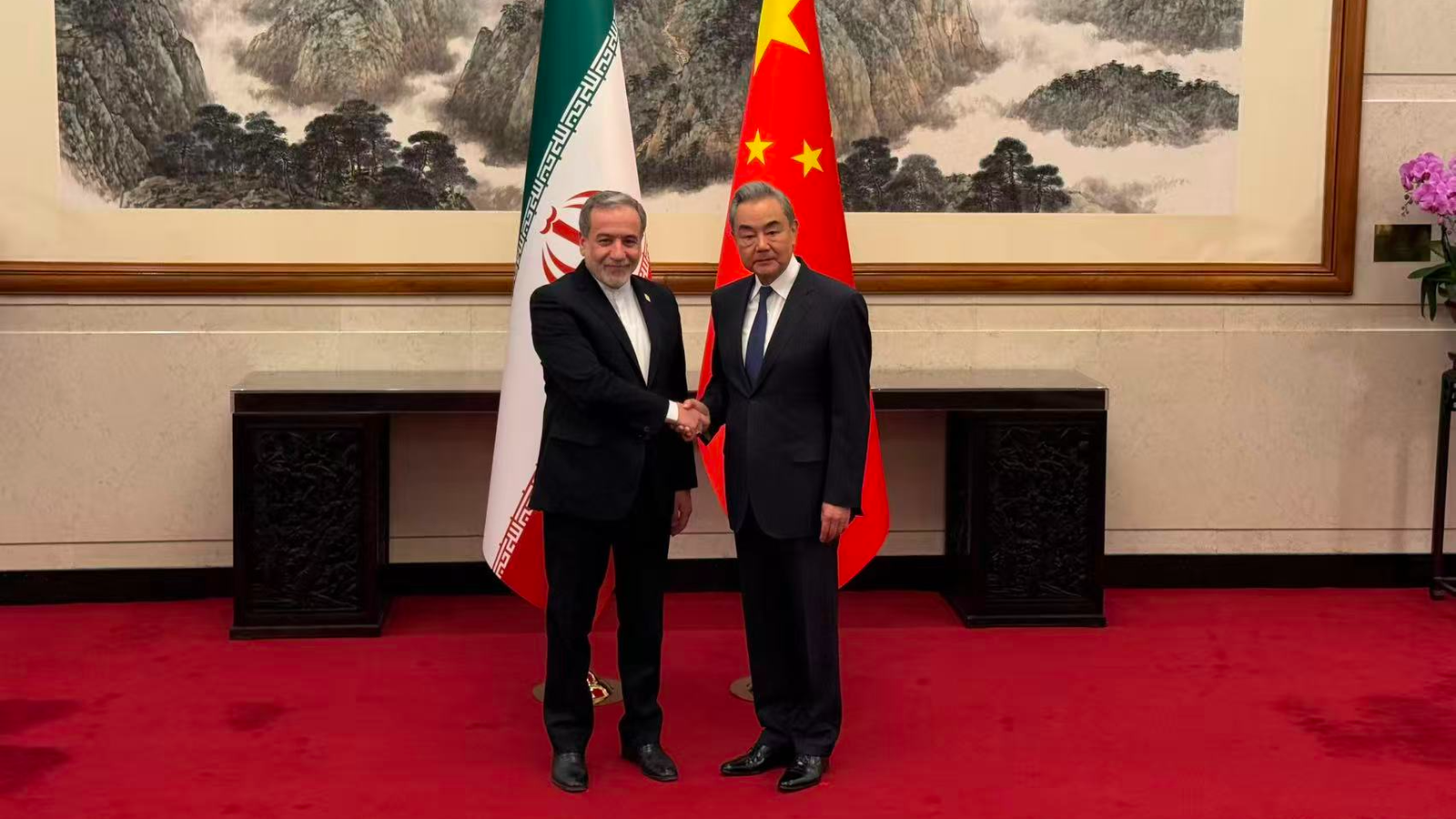
SINGAPORE: Dr Abbas Araghchi is currently on a diplomatic mission to the Orient, specifically Beijing, where the Chinese government has unveiled a “four-point proposal” for peace.
While the international press is preoccupied with dissecting the nuances of these peace overtures, I maintain that China is neither a genuine stakeholder in war nor a sincere broker of peace in the Middle East. Consequently, these proposals are largely irrelevant. To understand the true gravity of this visit, we must look past the flowery rhetoric and focus on the cold mechanics of geopolitics.
The Barter Economy of the Mullahs
For China, the Mullah-led Iranian regime serves a function remarkably similar to that of Venezuela or Cuba: it is a source of bargain-basement energy secured through barter deals. While these arrangements offer zero benefit to the Iranian citizenry, they are a lifeline for the regime. In exchange for oil, the Mullahs receive the technical components and hardware necessary to manufacture the missiles and drones that fuel their proxy campaigns across Lebanon, Iraq, and Yemen.
Furthermore, these “Yuan-Rial” transactions are paraded before the media to satisfy a certain ideological camp that has spent the last half-century eagerly and prematurely anticipating the “collapse of the dollar’s hegemony”. In reality, it is a survivalist trade-off for a sanctioned state.
The Shifting Mathematics of Oil
To grasp the strategic stakes, one must examine the data. Historically, China’s primary energy suppliers have maintained the following market shares:
- Russia: 15% – 18%
- Iran: 12% – 16%
- Saudi Arabia: 10% – 12%
However, by March 2026, these figures shifted dramatically. China’s reliance on Iranian crude surged past the 21% mark.
This spike was a direct consequence of the volatility in the Persian Gulf. As I have previously noted, when the threat of a blockade at the Strait of Hormuz intensified, Saudi Arabia immediately pivoted its supply strategy. Of the roughly 13 million barrels of oil Saudi Arabia produces daily, they redirected approximately 5 to 7 million barrels via overland pipelines, bypassing the chokepoints of Hormuz and the Bab el-Mandeb entirely to the Yanbu terminal on the Red Sea near the Suez Canal. This manoeuvre effectively fulfilled the energy requirements of Europe and the United States, neutralising the threat of a global energy crisis.
The Illusion of the Blockade
Contrary to popular hysteria, a devastating energy crisis via the Strait of Hormuz did not materialise for President Donald Trump or the European Union. Nevertheless, the perception of crisis persists, and Washington has leveraged this to implement a selective naval “interdiction” of Iranian tankers bound for the Orient.
The U.S. Navy is not attempting a total, airtight blockade, which is a binary way of thinking, but is instead injecting a lethal dose of uncertainty into the supply chain. This is why Dr Abbas has rushed to Beijing. He is there to coordinate a response with his Chinese counterparts regarding a reality where nearly 90-92% of Iran’s total oil exports are now tethered to a single, increasingly complicated route to China.
Why can blunt, domesticated minds never comprehend these?
Most of the successful students, the majority of whom society is domesticated to be bipolar-thinking. That’s a direct result of formal education. They think when someone scores 80%, they can obtain an A for the exam. If someone passes a 3.70 GPA, they can earn first-class honours. This mindset never successfully digests the true situations, and that’s the whole point of education. These people are easier to control. For example, I saw someone has commented that just because Vijay Thalapathy won only 108 seats in the Tamil Nadu election, he has been defeated in the election, as 118 seats were not reached. So the majority does not understand how the world works. That’s a direct inheritance of formal education. So we will not be successful in informing them with these variables that aren’t precise as they learnt in physics class. They are not just dynamic, and they are changing without unpredictable partners. So yes, left brainers will not make it to top in understanding this.
Strategic Conclusions: The Upper Hands
Dr Abbas’s visit confirms two critical geopolitical realities:
- China is Feeling the Squeeze: The disruption of Iranian supply is finally impacting Chinese industrial calculations, a primary objective of Washington’s strategy.
- The Trump Leverage: This economic strangulation provides President Trump with significant “upper hand” bargaining power ahead of his upcoming diplomatic engagements with Beijing.
While Iran has undeniably won the propaganda war, capturing the “hearts and minds” of those conditioned by simplified academic narratives, the United States is quietly achieving its functional objectives. Washington is successfully weakening the Iranian economy while maintaining global energy stability through its partnership with Riyadh.
In the theatre of the Middle East, the “winner” in the headlines is rarely the winner on the balance sheet. To understand the game, one must look at the pipelines, not the peace proposals.
News Director – Westvu.com | Geopolitical & Diplomatic Analyst at widge.edu.lk think tank